
Can Shopping Plastic Carry Bag Roll Reduce Packaging Replacement Time During Busy Sales Periods?
Oct 10, 2026
Yes — a shopping plastic carry bag roll can directly reduce packaging replacement time during busy sales periods. Because each roll contains hundreds of perforated bags wound on a single core, staff spend far less time restocking than they would with flat-packed individual bags. In high-traffic retail environments, particularly fresh produce sections, this continuous dispensing format keeps checkout and self-packing stations running without interruption. The time saved per transaction may seem small, but across a full shift during peak demand, the cumulative difference is measurable and operationally significant.
Understanding Shopping Plastic Carry Bag Rolls and Their Role in Packaging Efficiency
What a Carry Bag Roll Actually Is?
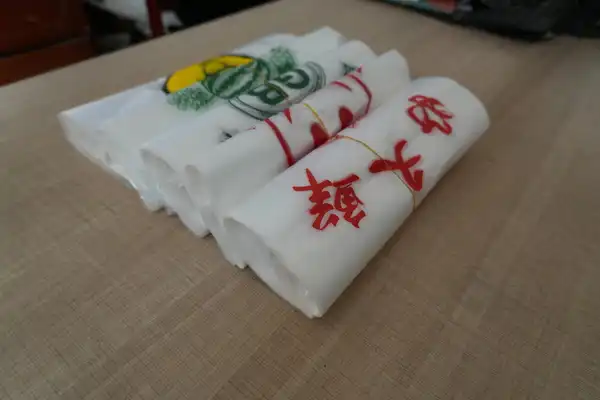
A plastic carry bag roll is a series of separate bags that are joined together at holes in them and wound around a cardboard core. Staff or customers can take one bag at a time and tear it carefully along the holes. No messing around with stacks or tangled bags, and no extra work. The roll stays in a fixed dispenser and keeps coming out until it runs out. It only takes seconds to get a new roll.
Key Physical Specifications Worth Knowing
The food-grade PE rolls I use here are made for areas with fresh food. They can hold 3 to 5 kilograms, which makes them good for carrying fruits, veggies, and other similar items. These sizes—24 cm wide to 35 cm long and 36 cm to 54 cm wide (specifically 24x36 to 35x54 cm)—meet the needs of most self-service produce without leaving extra material waste.
Why This Format Beats Loose Single Bags?
Loose bags bunch up, slowing down staff and customers. Rolls get rid of all that pressure. Because the film is punctured, each bag splits in a clean tear that doesn't stretch or change the shape of the film. For procurement managers who are focused on throughput, this consistency means that there are fewer service delays and less time spent on each customer at the scales and checkout points.
Packaging Challenges During Busy Sales Periods: Causes and Impacts
The Real Cost of Frequent Bag Restocking
A supermarket's produce section can handle thousands of transactions every day during busy times like holiday weekends or sales. When a bag dispenser runs out of bags, staff have to stop, find more, fill, and then start again. This can take anywhere from 30 seconds to several minutes, based on how close the new stock is. When that happens at several places and during several shifts, the total downtime turns into a real operating liability.
How Traditional Packaging Options Fall Short?
Paper bags get wet and tear easily in cold places, so they aren't good for places that store food. Rigid containers take up a lot of space on shelves and make packing take longer. When you need to separate flat-packed plastic bags that don't have perforations, it takes longer and is more likely to go wrong during busy times. All of these other options are slower than a shopping plastic carry bag roll system and take up more room than it does.
Staff Fatigue and Error Rates Under Peak Pressure
When packing areas are overworked, employees make mistakes like putting things in two bags when they only need one, using big bags for small things, or not closing properly. It's easier to make decisions when there are roll dispensers in the right places. You can always count on the bag being ready, the right size, and easy to tear. That consistency cuts down on both waste and mental load for floor staff during times when they can't have any distractions.
How Shopping Plastic Carry Bag Rolls Help Reduce Packaging Replacement Time?
Continuous Dispensing Eliminates Reload Interruptions
Based on the size of the bags and the thickness of the film, a single roll can hold anywhere from 200 to 500 bags. With that much stuff, a produce station can work for a full shift, or even longer, without having to be reloaded once. A flat-packed bag supply of the same amount, on the other hand, needs more frequent manual involvement and takes up a lot more storage room. The roll format focuses supply into a small, easy-to-access format that pretty much takes care of itself when demand is high.
Dispenser Placement and Workflow Design
By placing stations close to scales and checkout places, workers don't have to move around as much, which speeds up the packing process. In busy store settings, these are the main operational techniques that get measurable results:
- Pre-load backup rolls at each station before peak trading hours begin, so staff never search for stock mid-shift.
- Mount dispensers at counter height to allow one-handed bag retrieval while the other hand holds the product.
- Train staff on clean-tear technique so the perforation separates on the first pull without stretching the film or tearing the bag body.
- Assign a restocking rotation during high-traffic periods so no station runs dry unexpectedly.
These actions get rid of the main reasons why packaging stations are slow most of the time. When everything works together, the produce area moves people through quickly, even on the busiest buying days.
Evidence From Retail Operations
According to research published in the 2019 journal Packaging Technology and Science, automated or semi-automated dispensing systems in food stores cut the time needed to pack each unit by 18 to 27% compared to handling loose bags by hand. The study looked at a wider range of vending systems, but the main idea behind them is the same for roll-format produce bags: easy, reliable access to packing material speeds up every transaction it touches.
Selecting the Right Plastic Carry Bag Roll for Your Business Needs
Material Performance for Fresh Produce Applications
Food-grade LDPE (Low-Density Polyethylene) is the usual material for vegetable rolls because it is clear, flexible, and doesn't absorb water. The film doesn't get hard when it's cold; it stays flexible. This lets customers see what's inside, which is important in self-service produce areas. LDPE is also strong enough to keep things like broccoli stems and citrus fruit from puncturing shopping plastic carry bag roll without making the film too thick.
Matching Bag Dimensions to Product Range
Picking the wrong bag size wastes space and takes longer to pack. For fresh produce sections that deal with both small and large items, a supplier that has bags in all sizes from 24x36 cm to 35x54 cm gives purchasing managers the freedom to choose the right bag size for each type of product. Smaller sizes work best for mushrooms and leafy greens, while bigger sizes are better for melons, pineapples, and groups of more than one item. Having both at stations next to each other gets rid of the problem of sizes not matching.
Evaluating Supplier Reliability and Certification
ISO certification and QS (Quality Safety) approval are basic standards that can't be skipped for packaging that comes into contact with food. A supplier's production consistency, minimum order amounts, wait times, and ability to scale supply during yearly peaks should be looked at by procurement managers in addition to certification. If a seller sells to 40 or more countries, they have had to build the logistics and quality control methods that suppliers who only sell in their own country often don't have.
Environmental and Economic Considerations in Using Plastic Carry Bag Rolls
Recyclability and Material Reduction
LDPE film can be recycled through special streams for collecting soft plastics. Many supermarkets in the US already have these at the front of the store. For produce applications, thin-gauge rolls (usually 8 to 15 microns) use less raw material per bag than thicker options while still being able to hold the same amount of weight. One of the easiest ways to lower both material costs and environmental impact at the same time is to make the film lighter per unit.
Biodegradable Alternatives and Their Trade-offs
Biodegradable PE mixes with additives like EPI or d2w are available for buying managers who have to report on sustainability or are under pressure from regulators. These materials work about the same as regular LDPE in normal shop settings, but they only last 12 to 18 months if they are kept out of the sun. This needs to be taken into account in procurement planning when managing inventory for seasonal demand.
Long-Term Cost Efficiency
When compared to loose-bag options, roll-format packaging has a lower total cost of ownership because it requires less storage space, less labor, and less material per bag. For medium- to large-sized supermarkets that place regular, big orders, the difference in cost over a full buying cycle is important.
Conclusion
Plastic carry bag rolls with holes in them really cut down on the time it takes to change packaging in busy sales areas. When you put the dispensers in the right place and load them up ahead of time, the continuous pouring design gets rid of the main reasons why store packing stations are slow. Food-grade LDPE shopping plastic carry bag roll rolls in the 24x36 to 35x54 cm range are ideal for sections with fresh produce because they offer the right balance of load support, material efficiency, and dispensing speed. If you choose a recognized provider with recorded production capacity, you can be sure that every order will be performed well, not just the first one.

FAQ
How many bags does a typical produce roll contain?
Each roll can hold different numbers of bags depending on the bag size and film gauge, but most rolls in the 24x36 to 35x54 cm range can hold between 200 and 500 bags. This volume allows for longer use between reloads, which is the main operating benefit during busy trade times.
Is food-grade PE safe for direct contact with fresh produce?
Yes. Food-grade LDPE meets FDA standards for products that come into contact with food in the US. The material doesn't have any plasticizers or fillers that could get into food in a normal store setting, so it can be used directly on fruits and veggies.
What is the typical minimum order quantity for wholesale procurement?
Different suppliers have different minimum order amounts, but most B2B makers will take orders as low as one full pallet or a certain weight level. When purchasing goods for multiple stores or distribution centers, purchasing managers usually negotiate yearly volume deals that lower the cost per unit by a large amount.
Can these rolls work with existing dispenser hardware?
Most standard produce dispensers that are mounted on the wall or on a counter can take rolls with standard core diameters. Before making the first order, buyers should make sure that the seller knows the core diameter and roll outer diameter specifications. This will help avoid problems with compatibility.
How do perforation strength and bag integrity relate to each other?
The perforations are designed so that the weight of the roll doesn't cause them to separate by accident. Instead, a single downward pull on the dispenser makes a clean tear. During quality control, this balance, which is also known as a measured tear ratio, is checked to make sure it stays the same along the whole length of the roll.
Partner With SYM for Your Roll Bag Supply Needs
Since 2017, SYM, which is part of Rizhao Jinlida Plastic Co., Ltd., has sold flexible packaging to customers in over 40 countries. They have an 8,600 m² production plant and are ISO9002 and QS certified. Our food-grade PE carry bag rolls come in roll formats ranging from 24x36 cm to 35x54 cm. They are made on computer-controlled equipment that meets uniform quality standards. Get in touch with our shopping plastic carry bag roll supplier team at jinlidasuliao@zohomail.com.cn or go to jldplastic.com to get a price or samples.
References
1. Packaging Technology and Science — John Wiley & Sons, 2019
2. Journal of Cleaner Production — Elsevier, 2021
3. Food Packaging and Shelf Life — Elsevier, 2020
4. Plastics Technology — Gardner Business Media, 2022
5. Sustainable Packaging Coalition Industry Report — GreenBlue, 2023
6. International Journal of Retail & Distribution Management — Emerald Publishing, 2018

Send Inquiry
You may like