
Flat Poly Bag Rolls: Choosing Film Thickness and Roll Length
Nov 5, 2026
Choosing a flat poly bag roll https://www.jldplastic.com/continuous-roll-bag/flat-poly-bag-rollcomes down to two numbers: gauge and linear footage. Gauge — the film's thickness in mils or microns — sets how much load, puncture force, and moisture protection a single bag handles. Roll length sets how long a packaging line runs between changeovers and how much floor space a pallet occupies in the warehouse. Get those two figures right, and the rest of the specification follows. For a handle-less flat bag carrying 3–5 kg, a 1.5–2.0 mil LDPE film on a roll of roughly 1,500–2,000 feet covers most jobs; sharp or heavy contents push gauge upward, and high-speed lines push roll length up.
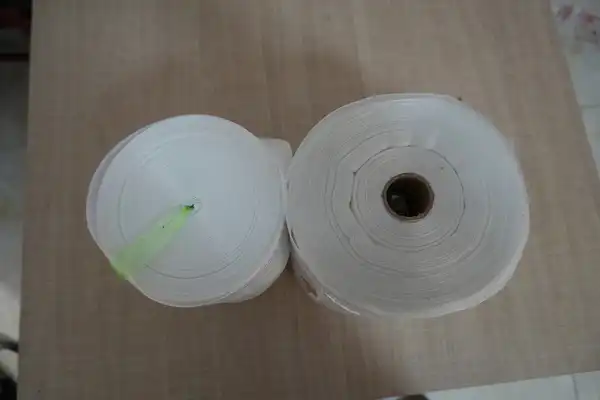
Understanding Flat Poly Bag Rolls: Key Characteristics and Benefits
If you want to compare numbers, it helps to know what these rolls are and where they belong on a work floor.
What a Flat Poly Bag Roll Actually Is
There are set holes in a Flat Poly Bag Roll so that each bag can be easily torn off. The polyethylene used is usually low-density (LDPE) or high-density (HDPE). The rolls are sealed at regular intervals. The shape is like an envelope; it doesn't have a gusset, a handle, or side pleats. The film stays tight against thin or boxy contents because of its flat shape, and each bag on a dispenser is easy to open.
These rolls are wound on 2-inch or 3-inch cores, and the space between the holes is exactly the same length as the bag. That detail is more important than most buyers think. If the perforation tie moves or the tear strength is too high, the bag either tears too short or won't separate, and the roll is doomed to get stuck at the worst possible time.
Where Handle-Less Flat Rolls Fit in Real Operations
The plain look of a flat design in roll format without handles doesn't give it away. The sizes range from 24 inches wide by 36 inches long to 35 inches wide by 54 inches long, and the capacities range from 3 kg to 5 kg. This fits three situations I find myself in all the time.
Sample containers, gloves, and small instrument parts are bagged by lab staff. They need film that opens easily and stays clear enough to read a label. As a dry goods packer, your job is to seal bags of grains, powders, hardware, and textiles so they can be stacked flat on a pallet. People who sort kitchen waste put a bag around the bins that can hold scraps without the handle getting caught on the edge. In all three cases, the qualities that are most valued are a steady gauge, clean perforation, and a film that doesn't stick together.
Material Choices and Their Practical Effect
It's not as simple as most people think that resin grade changes how a Flat Poly Bag Roll acts. LDPE is soft, clear, and doesn't tear easily, so it's good for hand-packed items and anything the customer sees. Because HDPE is stiffer at the same gauge, a smaller bag can hold the same amount of weight. This is helpful when the standard needs to meet a strength goal without adding extra weight.
There is linear low-density polyethylene in the middle, which makes them more resistant to punctures and improves the strength of seals. This is why many heavy-duty rolls mix it in. Additives take care of the rest: anti-blocks stop layers from sticking together on the roll, slip agents control how quickly a bag opens, and ultraviolet inhibitors make it last longer outside. When it comes to food and medicine, a fresh resin base is important, since recycled material might not be acceptable.
How to Choose the Right Film Thickness for Flat Poly Bag Rolls
It's easy to get the thickness number wrong either way, and it's the one number that buyers ask about first.
Reading Gauge in Mils and Microns
Gauge tells you how thick a film is, and mils and microns are the two numbers used on a quote. A mil is equal to 0.001 of an inch, which means that a 2 mil bag is about 51 µm thick. Along a roll, most Flat Poly Bag Rolls fall between 0.5 mil for light goods and 6 mil for heavy hardware. The stated number on a spec sheet has a production tolerance of plus or minus 10 percent.
That tolerance is based on how blown film lines really are, not on a marketing trick. If a buyer wants a guaranteed minimum, they should put it in writing and ask what test method is used to make sure it is true. It's possible for a 1.5 mil bag to be closer to 1.35 mil at its smallest point, which changes how it punctures on a load with sharp edges.
Matching Gauge to Load Weight and Edge Risk
The choice is mostly based on the weight of the load and how sharp the edges are. This is how I connect gauge to everyday tasks:
- 1.5 to 2 mil LDPE is usually used for a 3–5 kg bag without a handle that is 24 x 36 to 35 x 54 inches. That gauge can hold a lot of weight, seals well with regular impulse sealers, and keeps the cost of film per bag low.
- Machined parts, fasteners, and bone-in cuts all need 2.5–4 mil or a co-extruded structure with a tougher skin for their sharp corners. ASTM D1709 dart drop tests show how much impact the film can take before it tears.
- Light items like food, papers, and textiles work well at 0.5 to 1 mil. A smaller gauge lowers the cost of the material without affecting function.
Those three bands should answer most of your questions. If not, a sample run on your own line should do the trick.
Slip, Clarity, and Barrier: The Hidden Thickness Variables
On the same machine, two rolls with the same gauge can act in very different ways. To find out how easily a bag slides off a pick arm or opens under an air jet, use ASTM D1894 to measure the coefficient of friction. Any less slip and the bags will spread out from the stack. Any more slip and the bags will stick together and stop a high-speed feeder.
A barcode or printed label can be read through the film if the clarity, which ASTM D1003 measures as haze, is high enough. Moisture and oxygen flow are important when the contents are hygroscopic, like powders, seeds, or dried fruit. In these cases, a coex structure is often better than a thicker monolayer. This can't be told from gauge alone.
Determining the Ideal Roll Length for Your Procurement Needs
Roll length isn't talked about as much as gauge, but it has just as much of an effect on labor costs, downtime, and warehouse layout.
The Math Behind Roll Changes per Shift
The length of the roll directly affects how often the Flat Poly Bag Roll changes. If a line moves 40 36-inch bags per minute, it needs 120 feet of film every minute, or 7,200 feet every hour. A 3,000-foot roll takes twenty-five minutes, and a 1,500-foot roll takes twelve and a half minutes. When you double the footage, you get back a real chunk of shift capacity on a fast line because each change takes a minute or two of stopped production and the operator's time.
A small group may turn a roll twice a day at a manual packing station, so they don't need to do that much work. Before recommending footage, I always ask for the line speed and bag length. Those two numbers tell me everything else.
Storage, Handling, and Pallet Footprint
Longer rolls cut down on changes, but they take up more building room and make them heavier to move. A 2-mil LDPE roll that is 24 inches wide and 3,000 feet long has real weight to it. Anything heavier than 50 pounds should be lifted by two people or with a forklift, according to safety rules in the workplace.
The width of the roll also needs to fit the unwind mandrel and the space above it. On a small machine, a roll that is too big can get caught on the dancer arm or rub against the frame. It's easier to store and set up shorter rolls next to a manual bench because they are lighter and shorter. Before you agree to a footage, make a map of the storage height and lift equipment.
When Custom Roll Lengths Pay Off
Custom roll lengths are useful because standard footage doesn't always match a certain line. It is useful because a converter can wind to almost any footage that doesn't go against the rules. This saves time on high-cycle equipment, cuts down on the number of half-rolled films that are left over at the end of a production run, and makes it easier to control the weight of export pallets.
This is also helpful when the machine has a fixed mandrel and a shallow unwind bay. When you buy something, ask the supplier if they measure footage by meters or by weight. Weight-based estimates change with gauge tolerance, and a 5% difference in gauges shows up on the bill as a 5% difference in footage.
Flat Poly Bag Rolls Compared: Thickness and Length Versus Alternative Packaging Options
There is a problem that flat rolls solve. It saves more money to know where they stop being the right answer than to try to negotiate a price.
Flat Rolls Versus Gusseted Bag Rolls
Gusseted bag rolls have a pleat on the bottom or side that makes the bag bigger. This makes them good for bulky things like whole chickens, loose vegetables, and boxed parts that would stretch the joints of a flat envelope. Flat Poly Bag Rolls save film and make it easier to stack flat. There is less waste when you cut out a 24 by 36-inch flat bag than when you use a similar gusseted bag, and the flat bag lies flatter on a stack.
Often, the choice comes down to the shape of the content. Things that are more than a few inches deep need the gusset. Things that are flat, thin, or rigid do better in a flat bag.
Flat Rolls Versus Zipper and Ziplock Bags
With zipper bags, you can close them again and again, which is very useful for parts that need to be taken out and put back in again and again, like extra parts, medical kit items, and tool assortments. It costs more per unit, needs a thicker structure to hold the track, and fills up more slowly on automated lines. The Flat Poly Bag Roll costs the least per bag and fills up the fastest, but the bag stays open once it's opened.
For single-use storage like sorting trash, sending things only one way, or transporting samples, being able to reseal doesn't add anything. When you sell something or use something more than once, it usually pays for itself. Don't base the closure on habit, but on how often you use it.
Flat Rolls Versus Shrink Wrap
Shrink wrap makes a tight, tamper-evident skin that keeps a load stable. It works well for palletized cases and multipacks. It needs heat tunnels, uses more power, and the wrap can't be opened again without damaging it. A bag and a sealer are all you need to make flat rolls. You don't need heat, a tube, or a shrink frame.
When they do fight, it's not often. Shrink film is the right tool for buyers who need to bundle units and keep them from moving while they're being shipped. If someone needs to hold things individually and open them whenever they want, a Flat Poly Bag Roll is cheaper and works faster.
Procuring Flat Poly Bag Rolls: Considerations for B2B Buyers
Once the specifications are set, the buying decision is based on the ability, consistency, and landed cost of the supplier.
Setting Minimum Order Quantities and Volume Tiers
How many you need to order at a minimum depends on the size, gauge, and whether you need custom printing. The lowest bar is for plain rolls in standard sizes. Custom gravure printing raises the MOQ and costs more because setup time cuts into the run. When buyers have seasonal needs, like for agricultural packaging, they often split the yearly volume into scheduled releases against a single blanket order. This keeps the price level and spreads out deliveries.
That set-up also protects against running out of space. Instead of one delivery date, I would ask for a written release schedule with clear lead times for each shipment. This makes a big commitment more manageable.
Judging Suppliers on Certificates and Capability
Not only does the paperwork matter, but so does what's behind it. In this order, this is what I check:
- Certification and being able to track down materials. You can back up your own compliance file with proof from a supplier that has ISO 9002 quality management certification and China's QS (Quality Safety) certification, as well as proof of virgin resin documentation for food and medical grades. Not only ask for the logo, but also for the certificate scope.
- Equipment and space available. It depends on the supplier's computerized high-speed gravure presses, photoelectric correction laminators, and precise slitting lines to see if they can keep registration and gauge across a big order. There is room to handle holiday jumps in sales at an 8,600-square-meter plant with more than 100 employees.
- Export record. Suppliers that send goods to more than 40 countries have already fixed problems with paperwork, palletizing, and damage in transit that you might have on your first order.
When a procurement team starts working with a new supplier, these three checks answer most of the questions they have about risk.
Pricing, Lead Times, and Printing Customization
You should not bargain based on price per bag, but on landing cost per packed unit. There are times when a roll that costs 8% more but doesn't jam and stays true along its whole length is better value overall. Gravure works well with multiple colors and keeps fine details on film, but you need to plan for time to prepare the artwork and make the cylinders.
Find out how the supplier measures footage, what the contract says about gauge tolerance, and what happens if there is a short shipment. For orders going to other countries, make sure you know the package sizes and how the containers will be loaded early on. For example, a 35-by-54-inch Flat Poly Bag Roll order packs differently than a 24-by-36-inch one.
Conclusion
The only things that can be changed about a Flat Poly Bag Roll are the film width and roll length. If you measure gauge in mils or microns, it needs to match the weight of the load, the risk of the edges, and the level of protection the contents need. For example, a 3–5 kg bag without handles should land between 1.5 and 2.0 mil, while heavy or sharp items should go higher. The roll length determines how often it changes, how much space it takes up, and how heavy it is to move. The right length depends on line speed and bag length, not on habit. Compared to gusseted, zippered, and shrink formats, flat rolls are the best choice for slim, one-time containment. If you want to support throughput or quietly limit it, you can choose between certification, written gauge tolerance, and honest footage measurement.
FAQ
How do I pick film thickness for a 3–5 kg load?
Start with 1.5 to 2 mil LDPE for a Flat Poly Bag Roll without a handle that is 24 by 36 to 35 by 54 inches. When there are sharp points inside, move to 2.5–4 mil. When the fill is soft, or the bag is double-packed, stay at the lower end. A dart drop test with your own product is the fastest way to answer the question.
Can I order custom roll lengths and printed logos?
Yes. Our lines wind footage to fit your machine, and gravure printing puts logos and directions for handling in multiple colors right on the film. Expect a longer time to prepare the cylinder and a higher minimum order for printed work because the setup has to be spread out over the whole run.
What environmental benefit do recyclable rolls offer?
It is possible to recycle LDPE flat rolls into plastic lumber, pallets, and new film. They are identified by the code 4 resin. When you buy rolls that are wound to fit your exact footage, you avoid the waste of half-rolled films that build up at the end of a production run.
Source Flat Poly Bag Roll Directly from SYM
With SYM, you can match gauge and footage to the job. SYM makes Flat Poly Bag Rolls and ships them to customers in over 40 countries. Their handleless flat rolls range from 24 × 36 inches to 35 × 54 inches and can hold 3–5 kg of lab, dry goods, and trash-sorting work. For a quote, email jinlidasuliao@zohomail.cn with your bag size, load weight, and monthly volume, or go to jinlida.aixdb.cn.
References
1. ASTM International, "Standard Test Method for Tensile Properties of Thin Plastic Sheeting (ASTM D882)," 2023.
2. ASTM International, "Standard Test Methods for Impact Resistance of Plastic Film by the Free-Falling Dart Method (ASTM D1709)," 2022.
3. ASTM International, "Standard Test Method for Static and Kinetic Coefficients of Friction of Plastic Film and Sheeting (ASTM D1894)," 2022.
4. U.S. Food and Drug Administration, "Code of Federal Regulations Title 21, Part 177.1520 — Olefin Polymers," 2023.
5. Flexible Packaging Association, "State of the Flexible Packaging Industry Report," 2023.
6. Smithers, "The Future of Flexible Packaging to 2028," 2023.

Send Inquiry
You may like