
Flat Poly Bag Rolls for Industrial Parts Storage and Protection
Nov 2, 2026
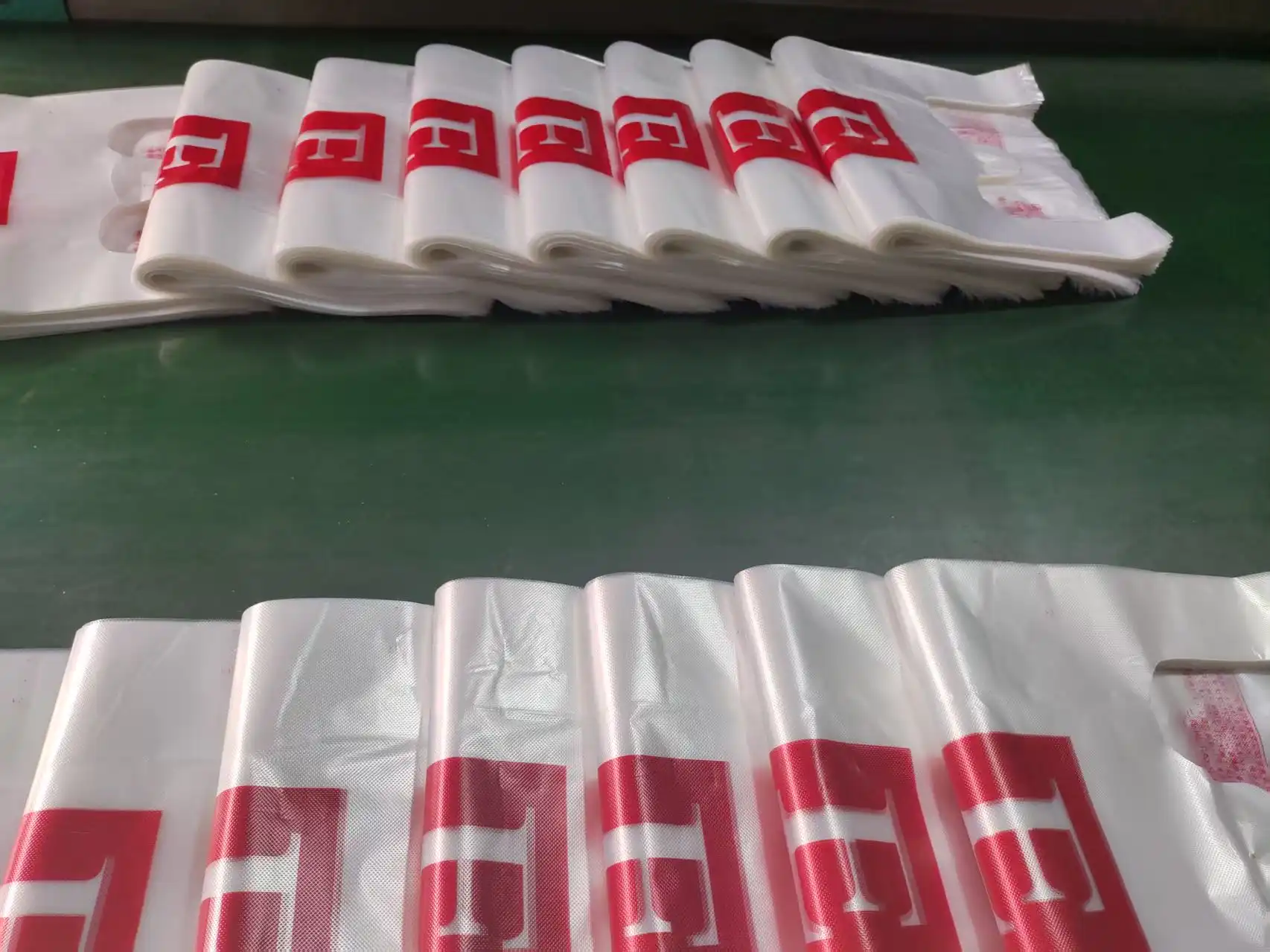
Flat Poly Bag Rolls for Industrial Parts Storage and Protection work best when the bag matches the part's weight, edge profile, and packing speed. A Flat Poly Bag Roll is a continuous strip of polyethylene bags, sealed at intervals and perforated for tearing. It guards small and mid-size parts against dust, moisture, and scuffing. I recommend buyers check three things first: load rating, film thickness, and bag dimensions. Our handle-less roll supports 3 to 5 kg and comes in sizes from 24 wide × 36 long to 35 wide × 54 long, so it fits many storage and shipping tasks.https://www.jldplastic.com/continuous-roll-bag/flat-poly-bag-roll
Understanding Flat Poly Bag Rolls: Types, Materials, and Sizes
What a Flat Poly Bag Roll Is and How It Differs
A Flat Poly Bag Roll is a long piece of polyethylene film that has been opened up, cut into bags, and heat-sealed. The bags are punctured so that they are easy to tear off. If you lay the bags flat, they make an envelope that can hold thin or small items. The side pieces of a gusseted bag open up into a box shape when you fold them. This makes room for bigger things. Poly tubing comes in an open tube that you have to cut and seal yourself. This makes the job more difficult. We just pull out a bag, fill it up, and tear it free every time we use our roll without a handle. You can add sticky strips or buttons to some forms to close off parts that you want to open again.
Material Choices: LDPE, HDPE, and PP
What kind of resin is used changes how a bag works and how it feels. Because LDPE is thick (about 0.91 to 0.93 g/cm³), the film stays clear, soft, and stretchy, which is good for parts that aren't perfectly straight. HDPE feels cleaner, is stronger, and keeps water out better when it is close to or above 0.94 g/cm³. LLDPE, a similar material, makes films less likely to tear or stretch, and it is often used in mixed films. It is clear and feels firmer than acrylic. We make bags out of HDPE, LDPE, and PP, so I can match the resin to your part instead of using the same film for all of them. One mil, which is 0.001 inch, or 25.4 microns, is the same as one width.
Sizes, Load Rating, and Types
Our flat design, which comes in roll form and doesn't have any handles, can hold 3 to 5 kg, which is about 6.6 to 11 pounds. From 24 inches wide by 36 inches long to 35 inches wide by 54 inches long, they have them. You can put small hardware sets, gaskets, fittings, and sample parts there as long as they don't weigh too much. First, figure out how big your hole is. Make sure there's space for the finish and fill. If you need different-sized parts, ask about printing and trimming that are made just for you. People who want to be good to the earth can also ask for LDPE film that can be recycled. My team can tell you which option meets the standards of your audit.
Benefits of Using Flat Poly Bag Rolls for Industrial Parts Storage
Protection Against Dust, Moisture, and Abrasion
If you store things with a lot of other people, metal and shiny parts get dirty, wet, and fingerprinted very fast. Polyethylene doesn't react with chemicals and doesn't soak up water, so a closed bag stops these things from touching the surface. Parts don't touch each other because of the film, so things don't get scratched when the bins move. During long trips, the same barrier keeps clothes, tools, and papers safe. Vapor corrosion inhibitors (VCI) can be used to make film for parts that rust, but you should make sure this is an option before you place your order. People on your team don't have to open as many bags because they can read part numbers and barcodes without having to.
Lower Handling Cost and Faster Packing
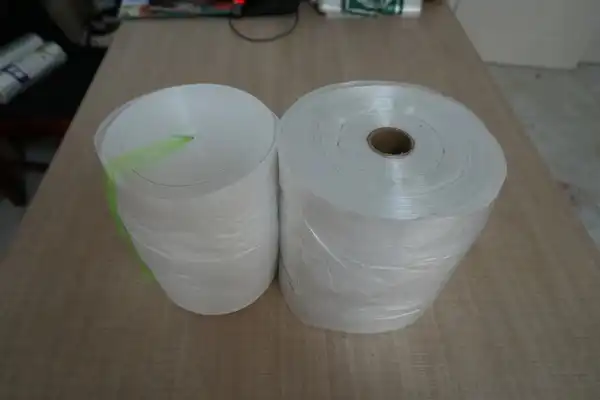
It's better to have Flat Poly Bag Rolls than stacks of loose bags. Many bags that are connected to one core take up a small amount of space. Film that isn't being used stays clean until you take it out. It takes less time to pick up each item than to separate loose bags because each one tears at the top. For lines that bag a lot of things every shift, that savings grows. The coefficient of friction (COF) of the film and the core size of your automatic dispensers should be looked at. Most cores are 3 inches in diameter. If the bags feed easily, the slip level lets us know. For high-speed feeders, we can change the COF chemicals.
Versatility and Traceability
There are different ways to roll a roll. In these groups, tests, supplies, and small tools are kept in labs. Stores keep dry items and spare parts. In kitchens and cafeterias, they are used to sort trash. They fit on narrow shelves because they are flat and don't have handles. The bags stack well in a bin. There is more power when we print on gravure film, which lets us add logos, part numbers, handle icons, or lot codes. This makes it easier to find things and check the stock. The print on each roll is the same, so the labels don't change from one place to another.
How to Choose the Best Flat Poly Bag Roll for Your Industrial Needs
Match Thickness and Strength to the Part
Start packing with the biggest and hardest thing you want to bring. Make sure that the weight doesn't go over or below 5 kg. Most metal parts that are sharp or heavy are made of LDPE between 4 mil and 6 mil. One-mil film is only good for light work. The ASTM D1709 Dart Drop test checks how well a film can handle pressure, and the ASTM D882 test checks how strong it is when pulled apart. Move and lift a sample bag to test it. The Flat Poly Bag Roll might not hold up when it swings, even if it does when it is held still. When you store things outside, you need UV filters because normal polyethylene breaks down in the sun. By adding UVI, film can last up to 12 months longer.
Flat Rolls vs. Gusseted and Poly Tube Bags
I compare formats based on how well they work with your program because each one is good for a different job:
- Flat roll bags: It's easy to tear these bags off the roll and stack them because they are flat. They're good for packing parts by hand quickly and automatically, and they work well with thin or small parts. It's not as big as a gusseted bag because the sides don't open up, and because it's easy, less film is needed.
- Gusseted bags: Those bags have side pieces that fold up and open up into a box shape that can hold things that are bigger or thicker. To cover more film and shape each bag, it costs more, and rolls take up less space than loose gusseted bags. When volume is more important than speed, they work best.
- Poly tubing: This poly tubing has an open tube that can be cut to any length. This is useful for parts that are long or don't have a standard shape. The work takes longer because each piece has to be cut out and sealed. The person using the seal and the person sealing it both affect how well it works. It works better for packing odd shapes than packing a lot of them.
These trade-offs show why a flat roll wins for small parts at volume, while tubing and gusseted bags cover special shapes.
Printing, Order Planning, and Supplier Checks
Custom art can change setup and wait time, so you should decide early on if you need printing. I write down the lead time and minimum order quantity and answer "yes" or "no" to them. This is because they depend on size, structure, print colors, and volume, so I don't guess. Ask the seller to show you their qualifications, quality records, test rolls, and proof that they have experience shipping. Some of the things that Rizhao Jinlida Plastic Co., Ltd. (SYM) has sent to more than 40 countries and regions are approved by ISO9002 and QS. Every day, all week, our customer service team is here to help you if you have any questions about the specs.
Flat Poly Bag Roll Manufacturing Process and Quality Assurance
From Resin to Roll
The first thing that is used to make a Flat Poly Bag Roll is resin. An extruder can be used to melt polyethylene pellets into a tube of film. With multi-layer co-extrusion, layers can be put together to make the film stronger or more resistant. When a drawing needs to be printed, high-speed gravure presses that are run by computers do the job. Laminating machines that use photoelectric correction put together laminated structures. Machines that make bags quickly close them and poke holes in them. And machines that cut the finished film into rolls and wind them on them. More than 100 people work in our plant, which is over 8,600 square meters and has more than 40 experts on staff. We can keep an eye on the quality of the measure, print, and seal from the plastic to the finished roll because these steps are done in the same building.
Quality Control Checks
There are four checks that are the most important. Next, make sure everything is the same. Checkers that use ultrasonic waves or micrometers make sure that the roll's thickness stays within +/- 10% the whole way through. The second thing is how well the opening works. Use pull tests to find out how much force, in grams, is needed to break the hole. It needs to be able to hold the thing but be simple to tear. Third, the strength of the seal: pull tests show that the bottom seal stays in place even when the weight is at its highest. For the fourth time, there is smoke. For retail-grade rolls, ASTM D1003 tests show that they are clear enough to use with customers. On a day when a lot of bags need to be packed, these checks make sure that every bag on the roll works the same way as the first.
Standards, Certifications, and Sustainability Direction
Certifications give your quality team something to look over. We have both the QS certification and the ISO9002 quality management certification from China. Get proof if your use has to do with food. 21 CFR 177.1520 is what the FDA says about olefin polymers that can be used in the US. The EPA says that plastics made up 12.2 percent of city solid waste in the U.S. in 2018. You should ask any seller if their goods can be recycled. Different drop-off points may take our LDPE rolls in different ways, even though they are resin code 4. It's important to make sure that biodegradable films and embedded tracking are still available before you make plans that depend on them.
Practical Guide: How to Use Flat Poly Bag Rolls for Industrial Parts Storage
Storing Rolls Before Use
Place Flat Poly Bag Rolls that haven't been opened somewhere cool, dry, and out of the sun. The properties don't change for two to three years when those conditions are met. Anti-static or VCI additives, on the other hand, might not last as long. Keep rolls in their box or on a clean shelf instead of putting them on the floor. Also, put something over the ends of the cores to keep dust from getting on the edge of the film that is showing. Move the stuff that's coming in and going out around, and write the date it arrived on each roll. Also, having clean hands or gloves at the point where the film is dispensed keeps oils and other particles from getting on it. This is important in food and labs.
Dispensing, Sizing, Sealing, and Labeling
It takes less time to make each pick when you know how to serve well. Hang the roll from the ceiling or put a simple stick under your waist so the film doesn't drag as it unwinds. Open up one of the bags and put enough things inside it so that it can be closed. As you keep going down, tear at the hole. First, fold or close the lid. Next, write the date, part number, and amount on the label. The mark can be printed on the clear film itself or put on the outside. Labels should be on the outside, and bags should be stacked in bins flat or straight. There shouldn't be more than 3 to 5 kg in each bag.
Reuse, Maintenance, and Recycling
Everything inside can be reused. The bags can be used again to store clean and dry hardware if they don't have any holes and the button still works. It's better to buy bags that you only use once than bags that you can use more than once. This is because a new bag is cheaper than cross-contamination. You shouldn't wipe something down to clean thin film. LDPE film with the resin code 4 has reached the end of its useful life. You can drop off clean, dry film at some stores. First, check out the rules in your area. Film that has been recycled can be used to make more film or plastic lumber.
Conclusion
It will protect industrial parts if the resin, thickness, and size of the Flat Poly Bag Roll are right for the load and the area. When the materials were put next to each other, it was clear that LDPE is clear and soft, HDPE is stiff and keeps water out, and PP is clear and feels harder. If you have a flat roll that can hold 3 to 5 kg, you can sort lab waste, dry goods, and kitchen waste all at the same time. This saves time and keeps the film clean when it's not in use. If you choose the right thickness based on impact and tensile data, weigh flat, gusseted, and tubing formats, and check the results for gauge, perforation, seal, and haze, you can avoid packing failures. Films last longer if they are stored correctly, used carefully, and the rules for reusing them are made clear. Recycling and legal goals can be met with the help of plastic codes and certifications.
FAQ
Can I reuse a Flat Poly Bag Roll bag?
Sometimes. As long as the Flat Poly Bag Roll bags are clean, dry, and not damaged, they can be used to store things inside again. Bags that have oil, test samples, or food waste on them should only be used once. What kind of seal it has and how thick the film is can also change how many rounds a bag lasts.
What is the typical lead time for custom printed orders?
I can't give you a set number for wait time because it depends on the shape, size, color of the print, and amount. Send us your artwork and the number of copies you need, and we'll let you know when it will be ready and give you a written price.
How do I choose the right bag thickness?
Set the part weight and edge sharpness to start. The roll we have can hold 3 to 5 kg. Some metal parts are very heavy or sharp, so they need 4 mil to 6 mil LDPE. Dart Drop testing can help you decide which one to use. Smooth, light things can be wrapped in tougher film.
Request a Flat Poly Bag Roll Quote from SYM
Find a business that makes Flat Poly Bag Rolls, can print on them, can make them in any size, and always has enough for sale. SYM is run by Rizhao Jinlida Plastic Co., Ltd., which has rolls that are 24 inches wide and 36 inches long, and up to 35 inches wide and 54 inches long, that can be used without holding them. For more information, email jinlidasuliao@zohomail.cn or go to jinlida.aixdb.cn to get samples, prices, or a list of our goods. We're open 24 hours a day to chat with you.
References
1. ASTM International, Standard Test Method for Tensile Properties of Thin Plastic Sheeting (ASTM D882), 2018.
2. ASTM International, Standard Test Methods for Impact Resistance of Plastic Film by the Free-Falling Dart Method (ASTM D1709), 2016.
3. ASTM International, Standard Test Method for Haze and Luminous Transmittance of Transparent Plastics (ASTM D1003), 2021.
4. U.S. Environmental Protection Agency, Advancing Sustainable Materials Management: 2018 Fact Sheet, 2020.
5. U.S. Food and Drug Administration, Code of Federal Regulations Title 21, Section 177.1520: Olefin Polymers, 2023.
6. International Organization for Standardization, ISO 9001: Quality Management Systems – Requirements, 2015.

Send Inquiry
You may like