
Green Plastic Carrier Bags Provide Sustainable Packaging Options for Grocery and Food Retail Suppliers
Oct 10, 2026
Green plastic carrier bags have become a practical answer to one of retail's most pressing problems: reducing single-use plastic waste without sacrificing bag performance. For grocery chains, food distributors, and packaging procurement teams across the United States, these eco-friendly carrier bags offer a workable balance between load-bearing strength, compliance with environmental regulations, and cost control. Whether you source biodegradable bags for produce sections or compostable options for prepared food counters, switching to sustainable carrier bags is a measurable step toward meeting both customer expectations and regulatory requirements.

Understanding Green Plastic Carrier Bags: Definitions, Types, and Environmental Impact
What Makes a Carrier Bag "Green"?
A shopping bag is "green" if it is made from bio-based resins, plastics that have been recycled, or synthetic materials that can be recovered, such as PBAT or PLA. In industrial composting or with certain bacteria, these things break down, so they don't have to stay in dumps for hundreds of years. The closed-loop lifecycle of green HDPE bags turns matter back into living things. So, buying teams that have to follow rules about ecology will be interested in them.
Common Types Used in Food Retail
There are a lot of different ways that the store business works. Biodegradable bags are broken down by microbes. Bags that can be composted are made to meet EN 13432 or ASTM D6400 standards. They break down in 180 days in large waste plants. To cut down on the need for new plastic, recycled-content bags use post-consumer plastics. Handles that are reinforced can hold more weight, so you can take bigger shopping bags without worrying that the handles will break.
Environmental Benefits Backed by Data
If you use approved reusable bags instead of standard HDPE bags, the European Environment Agency says you can cut carbon emissions by up to 36% per bag. It's also very important that microplastic waste is going down. Stores directly support circular economy models that put recovering materials ahead of throwing them away by giving customers bags that can be used again and again or recycled.
Comparing Green Plastic Carrier Bags to Alternative Packaging Solutions
Green Plastic vs. Paper Bags
The amount of carbon dioxide used to make paper bags is something that most people don't know. The Danish Environmental Protection Agency looked into how long plastic bags last and found that a cotton tote bag needs to be used 7,100 times to be as green as a plastic bag that is only used once. However, paper bags soak up water quickly, which makes them less stable when bringing fresh food or things that need to stay cool. Green plastic carrier bags keep their shape and weight even when it's wet outside.
Green Plastic vs. Reusable Fabric Bags
Utilizing a great deal of water and power, making fabric bags is a tough job. They're helpful for planned shopping trips, but they can get dirty in grocery stores if you don't wash them often. Eco-friendly green plastic carrier bags are a good middle ground because they are light, save shops money when they hand them out at checkout, and can be thrown away properly in trash cans.
Biodegradable vs. Oxo-Degradable: A Critical Distinction
People often mistake biodegradable bags for oxo-degradable bags when they buy them. When UV light hits oxo-degradable bags, they break down into tiny pieces of plastic. They are now against the law in the EU, and more and more US states are putting rules on them. Labels on really green bags say that they meet standards such as ASTM D6400, OK Compost, or BPI. When you buy a lot of something, you should always ask for papers from a third party to make sure you know what you're getting.
How to Select and Procure Green Plastic Carrier Bags for Grocery and Food Retail Suppliers?
To choose the right provider, you need to find a middle ground between rules for the environment and performance goals in the real world. A lot of things need to be thought about by procurement teams that handle large orders before they choose a green carrier bag provider.
There are a few main things you should look for in eco-friendly travel bags:
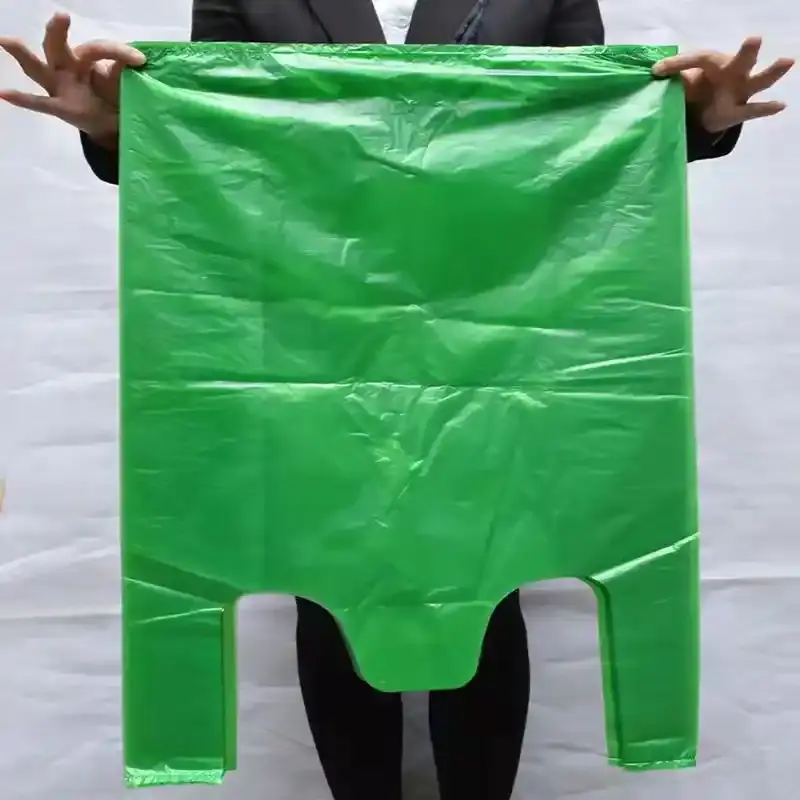
- Load capacity and thickness: Our dark green carrier bags, manufactured using filler technology, support approximately 5 kg of load and are available in sizes ranging from 10cm×28cm up to 65cm×110cm, with single-bag weights from 0.7g to 60g. This range covers everything from small produce bags to large waste collection and gardening bags.
- Material certifications: Verify compliance with ASTM D6400 (US), EN 13432 (EU), or AS 4736 (Australia). ISO 9002 and QS food-grade certification add another layer of supplier credibility.
- Customization capability: Multi-color gravure printing allows brand logos, product information, and recycling instructions to be printed directly on the bag. This supports brand differentiation at the retail shelf.
- Supplier reliability: Confirm minimum order quantities, lead times, and production capacity. A supplier exporting to 40+ countries with over 20 years of manufacturing experience offers stronger supply stability than a local converter with limited capacity.
Materials: Make sure the item meets the standards set by ASTM D6400 (US), EN 13432 (EU), or AS 4736 (Australia). The ISO 9002 and QS food-grade certifications make the supplier look even better.
There are many ways to customize the bag because multicolor gravure printing lets you write brand names, product information, and recycling instructions right on it. This helps brands stand out in stores.
Best Practices for Using and Disposing of Green Plastic Carrier Bags in Retail Environments
Retail Staff Training and Consumer Communication
It costs money for shops with high recycling rates to train their staff and give customers clear signs. On the outside of the green plastic carrier bags, there should be signs for the right way to throw things away and writing instructions for composting. The person at the register should be able to explain the difference between compostable bags and reusable bags if a customer asks.
Recycling Protocol Alignment
It is necessary to keep green plastic carrier bags apart from regular PE/PP plastic lines. You hurt the environment when you mix them, as it makes the recycling batches less clean. Find out from your local trash company if your bags can be used in composting programs at work or if they need to be picked up separately.
Lessons from North American Grocery Chains
A lot less trash is being made in North American grocery stores that use approved compostable bags in their vegetable and baking areas. When shops put in bag switches and informational signs, more people used the trash bins, and customers were less upset about single-use plastic. The bags are important, but they're not enough on their own. Operational integration is also necessary.
The Future of Sustainable Packaging: Trends and Innovations in Green Plastic Carrier Bags
Advances in Biodegradable Polymer Technology
Older starch bags didn't hold water as well as newer mixes that are high in PBAT do. The structural weakening that made customers unhappy in humid stores no longer happens with these better formulas. High-quality reusable bags can now hold up to 30 MPa of tension, which means they can stretch up to 500% before breaking. It's the same as other LDPE bags.
US and EU Regulatory Pressures Shaping Procurement
More rules are being put on single-use plastic at the state level in the US. With their new rules, California, New York, and Colorado are the first to follow suit. The EU Single-Use Plastics Directive is already making big food companies look at how they pack their goods. It will be better for purchasing teams that get green carrier bags now than when federal rules change.
Strategic Supplier Partnerships for Long-Term Compliance
When you work with manufacturers who have ISO certifications and quality systems that are regularly reviewed, the risk of not following the rules is smaller. When it comes to customs and environmental clearance papers, suppliers who have exported goods before are better able to adapt to new rules.
Conclusion
Eco-friendly carry bags are no longer a one-of-a-kind item; they are now something that all forward-thinking stores and food sellers have to have. There are legal and brand requirements that need to be met. The right service should provide approved materials, consistent quality, a range of sizes, and the ability to print on demand. If you buy certified green plastic carrier bags from a reputable company, you can protect your supply chain and the image of your brand as government rules get stricter and customer standards change.
FAQ
What is the shelf life of green plastic carrier bags in storage?
Under cool, dry warehouse conditions away from UV exposure, these bags remain structurally stable for 10 to 12 months before biodegradation begins to affect mechanical performance.
Can green carrier bags go into regular plastic recycling bins?
No. They must be separated from PE/PP recycling streams to prevent contamination. They are designed for industrial composting or organic recycling programs, not standard plastic recycling.
Are these bags safe for direct food contact?
High-quality versions comply with FDA food-grade standards or EU food contact regulations, using non-toxic bio-based additives suitable for transporting fresh produce and prepared foods.
How do I verify a bag is truly compostable and not oxo-degradable?
Request third-party certification documentation. Legitimate compostable bags carry certifications such as BPI, OK Compost, or ASTM D6400 compliance. Oxo-degradable bags carry no such certification.
What sizes are available for bulk procurement?
Available sizes range from 10cm×28cm to 65cm×110cm, with individual bag weights from 0.7g to 60g, covering produce bags, shopping bags, and large-volume waste or gardening bags.
Source Your Green Carrier Bags from SYM — Rizhao Jinlida Plastic Co., Ltd.
People in more than 40 countries have bought approved bendable packaging from SYM for more than 20 years. Their 8,600 ISO-certified building is where they do business, and they're open 24 hours a day, seven days a week to help customers. Gravure lets us print on green plastic carrier bags in various colors. Filler technology lets us make dark green bags from 0.7g to 60g, and we make sure they are fully food-grade compliant. Send us an email at jinlidasuliao@zohomail.cn or go to jldplastic.com right now to get prices and samples.
References
1. European Environment Agency. Biodegradable Plastics and Marine Litter: Misconceptions, Concerns and Impacts on Marine Environments. 2021.
2. Danish Environmental Protection Agency. Life Cycle Assessment of Grocery Carrier Bags. 2018.
3. ASTM International. Standard Specification for Labeling of Plastics Designed to be Aerobically Composted in Municipal or Industrial Facilities (ASTM D6400). 2021.
4. European Committee for Standardization. EN 13432: Packaging — Requirements for Packaging Recoverable Through Composting and Biodegradation. 2000.
5. Plastics Industry Association. 2023 Size and Impact Report. 2023.
6. United States Environmental Protection Agency. Advancing Sustainable Materials Management: Facts and Figures Report. 2022.

Send Inquiry
You may like