
How Continuous Roll Bags Reduce Bagging Time in Packing Lines
Nov 5, 2026
A continuous roll bag https://www.jldplastic.com/continuous-roll-bag/plastic-continuous-roll-bagscuts bagging time by removing the steps that slow operators down: separating loose bags, opening them, and reloading stacks. Bags on a roll are joined by micro-perforations, so an operator pulls one bag, loads the product, and tears it free in one motion. A dispenser holds the roll steady, and the next bag is always ready. Fewer reloads, less handling, and cleaner hand-offs keep a packing line moving. In this article, I explain how the format works, where it saves time, how it compares with other bags, and how to buy it with confidence.
Understanding Continuous Roll Bags and Their Role in Packing Lines
What a Continuous Roll Bag Is and How It Feeds
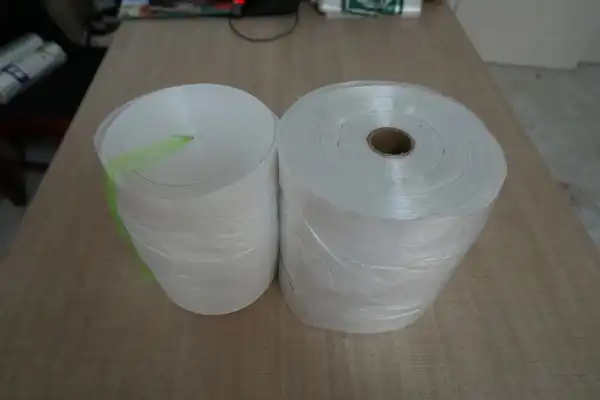
Plastic film that comes in tubes is used to make a continuous roll bag. Each bag is linked to the next by a tiny hole, and the whole strip winds around a center core. This means that as soon as the bags separate, they are ready to be filled. The supply is one long strip, so the worker never has to stop to restock a stack or line up loose bags. When someone pulls and tears in a manual station, the same feed logic works. The same logic also works in semi-automated stations with a mounted dispenser. One change in format gets rid of a lot of small pauses that add up over the course of a shift.
Types and Materials Buyers Can Choose
Roll bags come in different styles, and the right one for the product depends on it. Staff and customers can see what's inside because of the clear film. Film that is colored or printed hides the item or has a brand on it. Heavy-duty gauges can handle sharp or heavy items, and gusseted styles make room for big things. Some sellers also sell resins that can be broken down in nature, like PLA or PBAT, which meet EN 13432 standards. At SYM, our main offering for this subject is a roll-fed HDPE bag with a tight bottom. HDPE lets you make a bag that is thinner and stronger than many other options. This helps keep the cost of the materials down. Before you buy, ask your seller what kind of film will work best for your item.
Dimensions That Affect Line Speed
There are three ways to measure the speed of a drive line: the width, the length, and the thickness of the film. The HDPE bag we sell is roll-fed and can hold 6 kg. It comes with paper cores that are 24 inches wide and 36 inches long or 35 inches wide and 54 inches long. A bag that is too big loses film and makes it take longer to tie or seal. When a bag is too small, workers have to squeeze goods inside it. Puncture and load resistance are set by thickness, which is measured in gauge. The dart drop test in ASTM D1709 is a common way to compare the impact strength of different films. Pick a size that fits the item well with some extra room to close it, and then test it with 6 kg of weight.
Common Packing Line Challenges and How Continuous Roll Bags Address Them
Manual Handling and Frequent Reloads
If you walk by any station where people pack things by hand, you will see small delays. A worker picks up a bag from a stack and rubs the hole to separate the layers. Sometimes they pick up two bags at once. Also, each stack runs out and needs to be refilled. Waiting and moving things around that aren't needed are two of the seven standard wastes in lean manufacturing, and these breaks fit both of them. A roll holds many bags that are connected to each other, so the operator doesn't have to reload as often. It's easy to do the same thing over and over because the bag dispenser always puts the next bag in the same spot. Making things the same also helps new workers get up to speed faster.
Tearing, Jamming, and Perforation Design
The problem is with rolls that aren't made well. If the holes aren't strong enough, the bags will separate early. If it's too strong, the film will stretch, putting stress on the bottom seal. Tension-pull tests show that the perforation breaks before the seal feels stress when the tie-to-slit ratio is balanced. A pump can also get clogged up with film that is thick in some places and thin in others. So, I've asked the quality assurance teams to check the gauge's uniformity along the whole roll and use ASTM F88 to test the seal's strength. The secure bottom on our bag is meant to keep it together even if a 6 kg load falls into it.
A Simple Time-Savings Example
This is just a quick math problem, not a measured answer. It takes two more seconds to separate and open a pre-cut bag, and each shift, a station fills 1,500 bags. Five hours, or 3,000 seconds, is that much time? If a roll takes away most of that handling, those minutes can be used to fill and seal. The gap gets bigger when you add the reload stops that stacks need. You should time a few cycles on your line before and after a trial because your numbers will be different. In the world of business, real numbers from your line are more reliable than any general claim, even mine.
Comparing Continuous Roll Bags With Alternative Bagging Solutions
Roll Bags Versus Pre-Cut Stacked Bags
Pre-cut stacked bags are good for small amounts and a range of sizes. The operators pick one, unfold it, and open it. Each pick costs a moment of attention because the stack can move, stick together, or fall over. A continuous roll bag always puts the bag in the same place and doesn't need to be separated into layers. Rolls are also easy to store because one core can be used instead of a big box of loose bags. If you only want one size, a roll system is better. With a stack system, you can easily switch between sizes. When one product is made on a line for a long time, rolls usually work better.
Roll Bags Versus Ziplock and Gusset Bags
Ziplock bags protect and reseal, which works for customer packs but costs more and takes longer to close. Gusseted bags can hold bigger things and stand up straighter on a shelf, but they usually come in pairs or stacks. Rapid pull-and-tear filling doesn't work well with either style. A function that lets you seal it again isn't usually needed for bulk foods like seafood, meat, or industrial parts that go into a box or case. For those tasks, a roll-fed HDPE bag with a tight bottom works well. It opens quickly, can hold up to 6 kg, and is easy to hand out. Keep a zipper or stand-up pouch on hand for an item line that needs to be resealed or has a stand-up look.
Cost, Durability, and Environmental Considerations
Compare the whole price, not just the price per bag. Work hours, film loss from the wrong size, and storage room should all be recorded. This means that less resin is needed per bag because HDPE can be drawn down to a thinner gauge while still being strong. The right choice depends on the product because LDPE is clearer and less likely to get punctured by sharp objects. There are recyclable PLA or PBAT types for those who care about the environment, and the unit price often goes down as the quantity goes up. Ask each supplier for data on gauge tolerance, seal test data, and prices for a range of quantities so that you can compare offers that are all the same.
Procurement Guidelines for Continuous Roll Bags in a B2B Context
Match Specifications to Your Line
Beginning with the item and the line. Write down the item's weight, form, and amount of moisture. For items sold in wet markets, like fish or vegetables, the bottom needs to be stable. For industrial parts, the bottom may need to be resistant to punctures. Write down how fast you fill and whether your workers use a pump or their hands. Then check the core. Compare the dispenser's size to the core's diameter and the roll's outer diameter. Some machines can make cores in any size between 1 and 3 inches. Make a list of all of these things before you ask for quotes; that way, every company will charge the same amount for the same thing.
Evaluate Supplier Capability and Customization
Check out what the provider manages in-house. We at SYM (Rizhao Jinlida Plastic Co., Ltd.) have been making things for more than 20 years, have an 8,600 m² plant, and have more than 100 workers, including more than 40 technical staff. There is ISO9002 quality control certification for us, as well as China QS approval. High-speed gravure printing machines, high-speed bag-making machines, and precision slitting machines are some of the things we use. We can make the film structure and branding fit your needs with multi-layer co-extrusion and multi-color printing. There are 24 hours a day, 7 days a week that our customer service is open.
From Inquiry to Delivery, and Why Samples Matter
It's a short path. Send information about your product, including its size, amount, and the device you want to use it with. We look over the specs and make sure the film and size are correct. After that, ask for samples and test them on your own line, not on a bench. Check how it dispenses, tears off, holds up under a 6-kilogram load, and stores. Once it's okay, you place the large order. Lead times for continuous roll bags vary from one to four weeks, based on the source and the size of the order. Make sure you get a written date at the quote stage. A failed production run costs a lot more than checking a sample.
Improving Packing Line Performance With Continuous Roll Bags
Pair Rolls With the Right Dispensers
The roll is only half of the system. One part of the bag holds the core, keeps the tension steady, and sets the height of the bag opening. A simple box is often mounted on the counter of a wet market stand, while an industrial line might use a frame that is bolted to the station. Connect the spindle of the dispenser to the core of the paper and make sure the outside diameter of the roll fits the housing. Pulling on bags too much or too little can make them stick. Set up the dispenser close to where the film is filled so that the operator doesn't have to reach far. Also, keep the work surface free of film scraps.
Train Operators and Adjust Workflow
With a new structure, you need a short training lesson. Show the workers how to carefully pull the bag and tear it along the opening, not by pulling it too hard. Show them how to load a new roll in the right direction and how to report missed perforations right away. The worker won't have to walk as far if you put the scale, the boxes, and the dispenser in a tight triangle. Run the first shift with a supervisor nearby, and at the end, ask for feedback. Small changes to the layout, like moving a box ten inches closer, can often get rid of extra movement.
Track Packing Rate, Downtime, and Labor Hours
Check it before and after the move. Keep track of the number of bags packed per hour, the amount of downtime, and the number of hours worked per thousand units. These are often included by plant managers in OEE, which stands for "overall equipment effectiveness." OEE is a term that came about from "Total Productive Maintenance" and includes availability, performance, and quality. Get information for at least two weeks, since one good day doesn't show much. Check the bottom seal and film gauge if the rate of packing goes up, but so does the number of flaws. Tell buying what the results show so that the next order is based on what the line really needs.
Conclusion
Continuous roll bags cut down on the time it takes to bag things because they connect bags on one core. This means that workers can pull, fill, and tear bags without having to separate or open loose bags and with a lot less reloading. Tough perforations, a steady gauge, and a good bottom seal keep things from breaking and jamming. Instead of pre-cut, Ziploc, or gusset bags, rolls are better for making a lot of the same size bag. Other formats are better for resealing or standing up. Buyers should make sure that the width, length, thickness, and core size of the samples are right for the line. They should then test the samples with real loads and record the packing rate, downtime, and labor hours. This article talks about a roll-fed HDPE bag that can hold 6 kg and has a secure bottom. It can be used in wet markets and on industrial lines with dispensers.
FAQ
Are continuous roll bags available in eco-friendly materials?
Yes. PLA or PBAT resins that meet EN 13432 norms can be used to make compostable versions. When you ask, let us know what your green goals are for our basic continuous roll bag, which is made of HDPE.
Can I add printed branding?
Yes. Gravure printing in more than one color lets us put logos and text on the film. Send us your artwork, along with its size and number, and we'll let you know what's possible.
How long do bulk orders take?
It can take anywhere from one to four weeks to get large roll orders, but it depends on the seller and the size of the order. Let us know how many you want, and we'll confirm the plan.
Will the bags fit my dispenser?
The rolls we sell come on paper cores. Send us the dispenser's core diameter and the widest and narrowest points on the outside, and we'll make sure it fits. For some machines, you can get cores in any size you want, from 1 to 3 inches.
Call to Action
Call SYM right away if you want to shorten the time it takes to bag things on your packing line. We can give you a quote on our 6 kg roll-fed HDPE bag and send you samples. We have been making continuous roll bags for more than 20 years, have customer service available 24 hours a day, and export to more than 40 countries. Email jinlidasuliao@zohomail.cn or go to jinlida.aixdb.cn to tell them what size, amount, and container you need.
References
1. Lean Enterprise Institute, Lean Lexicon, 2014
2. Shigeo Shingo, A Revolution in Manufacturing: The SMED System, 1985
3. Seiichi Nakajima, Introduction to TPM: Total Productive Maintenance, 1988
4. ASTM International, ASTM D1709 Standard Test Methods for Impact Resistance of Plastic Film by the Free-Falling Dart Method, 2016
5. ASTM International, ASTM F88/F88M Standard Test Method for Seal Strength of Flexible Barrier Materials, 2021
6. U.S. Food and Drug Administration, 21 CFR 177.1520 Olefin Polymers, 2023

Send Inquiry
You may like