
How PE Continuous Roll Bags Improve Packing Line Efficiency
Oct 31, 2026
A PE continuous roll bag improves packing line efficiency by replacing loose bag handling with one perforated roll that feeds a fresh bag every cycle. An operator or a machine tears off a bag, fills it, and moves on without stopping to separate, count, or open stacked bags. Uniform bag sizes cut film waste, a sealed base keeps contents inside, and fewer pauses keep the line moving. In this guide, I explain how these rolls work, where traditional bagging loses time, and how to select and introduce them in your plant. I also share the specifications of our own roll bag.
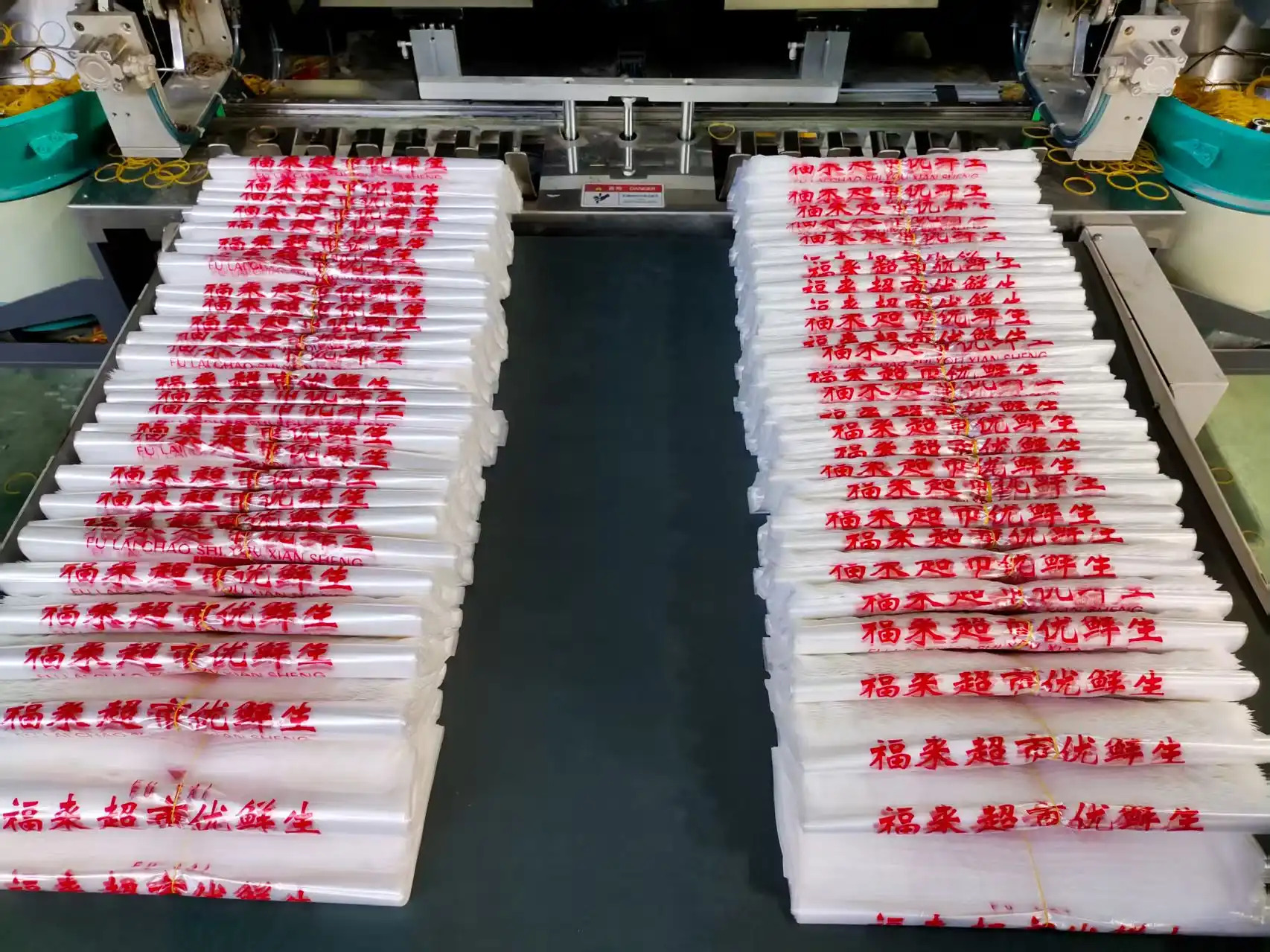
Understanding PE Continuous Roll Bags and Their Role in Packing
What a PE Continuous Roll Bag Is
A PE continuous roll bag is a polyethylene bag that comes wound around a core. Each bag is joined to the next one by a line of holes. These rolls are made from LDPE, LLDPE, or HDPE plastic and come in a tube or side-sealed shape with a bottom that is sealed with heat. Take a bag off the roll, tear it at the hole, and put things inside it. The bags stay clean and ready until you need them because they stay in order on the roll. This format works with both manual and automatic bagging stations.
Material and Physical Properties
Polyethylene is a thermoplastic that is flexible and doesn't absorb water well. When you stretch LDPE, it feels softer, but HDPE is harder and stronger. A PE continuous roll bag has a tensile strength of 20 to 40 MPa and can stretch up to 500% before it breaks. This means it can handle loads that aren't evenly distributed without breaking suddenly. PE can also stand up to acids, alkalis, and vegetable oils, and the clear film makes it easy for staff to read at a glance. This is what FDA 21 CFR 177.1520 says about olefin polymers used with food in the US, so I always ask a provider about the resin grade.
Where These Bags Are Used
PE continuous roll bags are useful in many fields. They are used in the vegetable area of supermarkets because the film stays flexible near 0°C and doesn't tear easily when it comes in contact with water. Hardware stores need to be able to pack fasteners and small metal parts that can't be punctured. Laboratories collect samples on rolls because the inside of the bags stays clean until they are used. People who pack snacks and dried fruit put large amounts of food in them, and people at home use them to store food. This is always a good thing because it means faster, more even bagging with less handling.
Identifying Inefficiencies in Traditional Packing Lines
Manual Handling Delays
Getting loose bags may look easy, but it takes a few small steps to do each one. Someone picks up a bag, takes it off the stack, opens the mouth, and puts it down. It's harder to open things when they stick and stick together, especially in dry places. During a shift, those few seconds happen thousands of times. The lost time adds up to real labor costs over the course of a shift. After a slow bagging step, every station on the line that comes after it has to wait. Most of these steps are skipped when you use PE continuous roll bags because the next bag is already in place when the last one leaves.
Waste and Inconsistent Bag Sizes
Extra film is put into every package when a plant has one big bag for many items. Size mistakes are also caused by mixed stock. If the bag is too short, it won't close, and if it's too long, it loses space and makes the pack look messy. Both problems can be avoided by ordering a set size. Our sizes range from 24 inches wide by 36 inches long to 35 inches wide by 54 inches long, so a packer can match the bag to the portion instead of trying to force the portion into the bag. Less film per pack means less money spent on materials and less room to store them.
Downtime and Quality Losses
Overall equipment efficiency, or OEE, is a measure of how well equipment is available, performing, and maintaining quality. It is kept track of by production teams. All three had problems with bags. The line is slowed down by stacked items that are too close together and bags that are torn. Hand feeding slowly hurts efficiency. Bags with weak seals and holes in them are called rejects, and they lower the quality. When moving quickly, gusseted or zippered bags can also have trouble because each one needs its own opening. When bags are fed into a machine in a certain order, the input is steady and predictable. Having steady and predictable inputs is an easy way to protect all three OEE factors.
How PE Continuous Roll Bags Solve Packing Line Bottlenecks
Continuous Feed and Clean Tear-Off
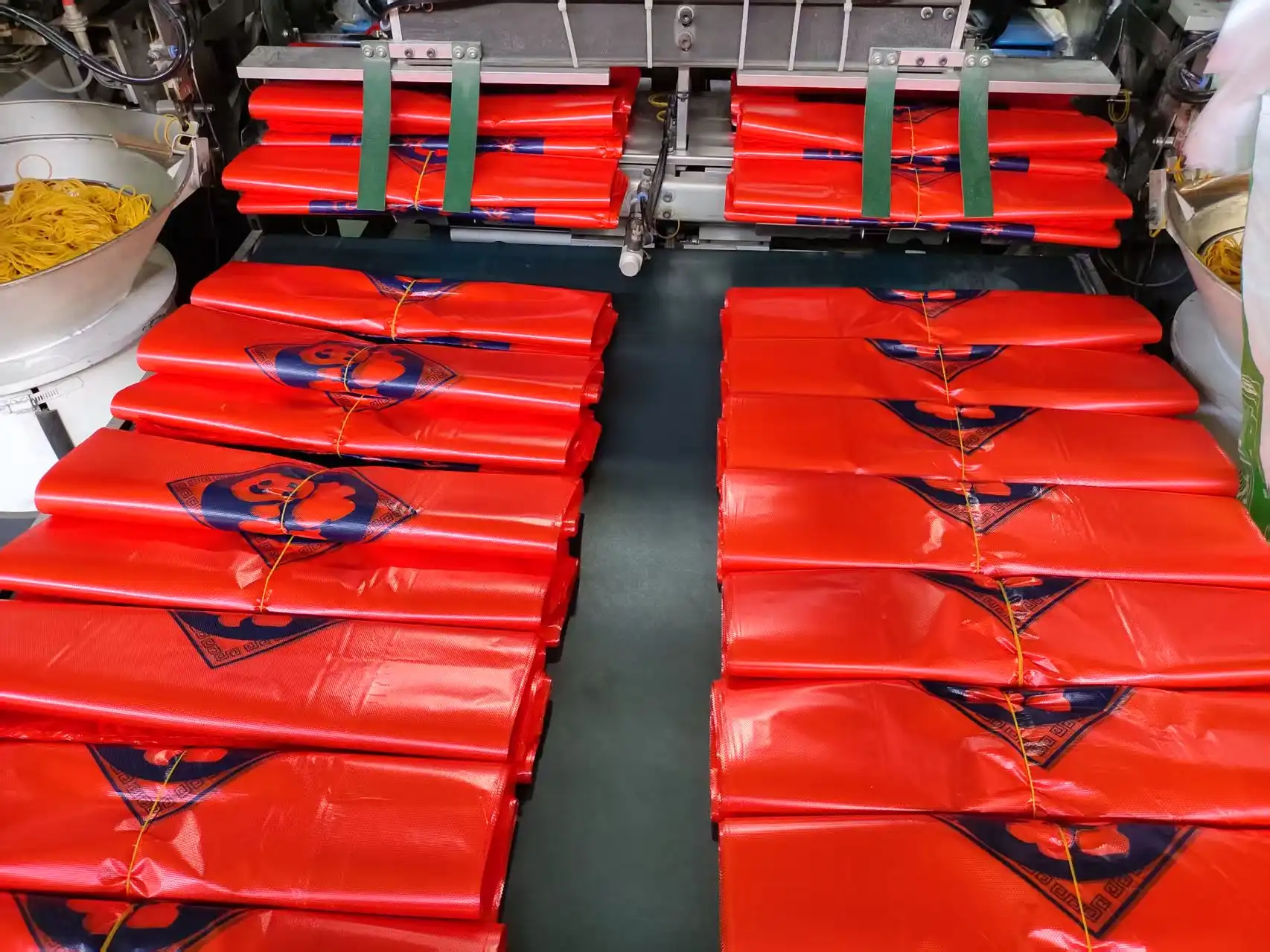
PE continuous roll bags come in a set order. The operator pulls one bag forward, puts things in it, and then tears it along the holes. A feed wheel on a machine does the same thing. Here, precise perforation is important. When the break force is too high, hands have a hard time, and the bag spreads. If it's too low, the automatic rollers will separate the bags too soon. We make sure that the space between cuts and ties is right for the thickness of the film so that each bag comes apart easily. That keeps the machines and workers in sync and gives them a steady edge to work with.
Fewer Leaks and Less Rework
It's messy to clean up after a bag splits at the base, and the line stops when it does. Our PE continuous roll bag can hold up to 4 to 6 kg and has a heavy-duty bottom that is heat-sealed to keep water out. Burst pressure and peel strength tests check to see if a seal can stand up to the force of falling goods. A free-falling dart is used in ASTM D1709, which is the standard test method for film impact resistance. These kinds of checks cut down on rejects at the filling station. Then, operators move goods instead of repacking them, which takes less time.
Matching Bag Size to Product and Machine
The bag fits the part because you ordered a certain size. As long as the fill weight stays between 4 and 6 kg, choose the smaller end of the range for lighter fills and the larger end for heavier ones. After that, check the machine. The inside diameter of the core is usually 3 inches, and the outside diameter of the roll needs to fit your wheel. On high-speed spindles, we can change the turning force to stop telescoping. To get things out quickly, we can lower the surface resistivity and stop static buildup by adding anti-static agents during extrusion.
Selecting the Right PE Continuous Roll Bags for Your Packing Line
Thickness, Strength, and Product Fit
Start with what you're making. Parts that are sharp need a film that is thicker and more resistant to punctures. On the other hand, soft produce needs to be able to bend and stay dry. Check the estimated load of the bag against the weight of each fill, and use real goods to try. Because regular polyethylene doesn't hold pressure well, vacuum packing needs a structure made of PA and PE that was co-extruded. The coefficient of friction (COF) of a film can be changed to make it easier to handle or faster to dispense. If you tell the supplier about your product and line speed, it will be much easier to find the right gauge.
Our PE Continuous Roll Bag at a Glance
Here are the main things that make up our PE continuous roll bag.
- Virgin PE material: The bag is made from high-purity virgin PE, which makes a film that is flexible and doesn't get wet. When you use clean resin, you don't get the recycled impurities that can make the film less clear and less strong. This works well for fresh food, big snacks, and home food storage, where buyers and end users care about both how the food looks and how much wetness it keeps in.
- Load and seal: It can hold 4 to 6 kg, and the bottom has a strong heat seal to keep things inside. This pair works well with heavy fills because the base can handle the weight when a worker moves the bag, drops it on a conveyor belt, or lifts it.
- Perforation and size: The sizes range from 24 inches wide by 36 inches long to 35 inches wide by 54 inches long. Precise opening makes it easy to tear. Packers can choose a bag close to the portion from that range. This cuts down on extra film and keeps finished packs neat on the line and on the shelf.
These features fix the main reasons why lines stop working, which are slow separation, weak bases, and sizes that don't match.
Quality Checks and Supplier Qualifications
Find out how any supplier checks four things: the strength of the holes, the consistency of the gauge, the integrity of the heat seal, and the purity of the resin. Ultrasonic thickness gauges make sure that the film is even across the web, which stops thin spots from popping. The ISO9002 quality management certification and China's QS certification are held by Rizhao Jinlida Plastic Co., Ltd. (SYM). Our factory is 8,600 square meters and has high-speed gravure printing and bag-making machines that are controlled by computers. This lets us brand a roll in more than one color. More than 40 countries get our packages. Before you place your first order, get these details in writing and some sample rolls.
Implementing PE Continuous Roll Bags in Your Packing Process
Check Machine Compatibility First
Before you place your order, make a list of your machine's details, such as its spindle size, core inner diameter, maximum roll diameter, and bag width range. Our PE continuous roll bags usually have a 3-inch core, but please let us know what your equipment is. Use a sample roll to do a small test on one line. Third, make sure the unwinding is smooth, the perforation tears are clean, and the bag opens steadily. If the roll shrinks, the tension on the winding needs to be changed. Before you place a full order, you can get a short sample that doesn't cost much and shows you any problems.
Plan the Transition and Train Your Team
Change lines one at a time. For one or two weeks, keep the old bags out so that workers can compare the two styles. Show your staff how to put things on a roll, thread it, and tear a bag off without stretching it. Show them the early signs of trouble, like bags that don't go together or tears that aren't straight, and assign someone to keep track of problems. Count easy things like bags per minute, rejects per shift, and film used per pack before and after the change. Any general claim will not show the real gain as well as your own data when you switch to PE continuous roll bags.
Storage, Sourcing, and Bulk Planning
Keep rolls out of the sun and heat in a cool, dry place. The system will stay stable for 12 to 24 months if those things happen. Heat and UV light can weaken film and bend rolls. When looking for a manufacturer, pick one that can keep quality high even when they have a lot of orders and deal with seasonal highs. A lot of buyers, like companies that ship food and pack snacks, buy in bulk to make sure they have a steady supply throughout the season. You can get everything you need for your plan in one order if you ask about custom printing, size choices, and wait times.
Conclusion
A PE continuous roll bag speeds up the packing line by getting rid of the small delays that come from loose bags. The perforated rolls feed the bags in order, which cuts down on handling time, errors in size, and extra film. Leaks and rework are less likely to happen because the bottom is heat-sealed and the load rating is 4 to 6 kg. Clean perforation allows for steady manual and machine use. To make a good choice, you need to make sure that the film thickness, bag size, core diameter, and winding tension are all right for the product and the equipment you're using. You should also check the perforation strength, gauge uniformity, seal integrity, and resin purity. With tests on one line, staff training, and the right way to store things, these features can be turned into measurable results, like more bags per minute and fewer rejects.
FAQ
Why does a bag tear unevenly at the perforation?
Most of the time, uneven breaking means that the design of the holes doesn't match the thickness of the film. We change how far apart the cuts and ties are based on the film gauge so that each PE continuous roll bag can be taken apart easily by hand or by machine.
Can I use these bags for vacuum sealing?
Polyethylene doesn't hold a vacuum very well. For vacuum packing, you need a multilayer structure made of co-extruded PA and PE. Let us know what you're making, and we'll help you choose the right film.
How long can I store the rolls?
When kept out of the sun and heat, the film stays in shape for about 12 to 24 months. Rolls should be kept in a cool, dry place until they are loaded.
Will the rolls fit my automatic bagging machine?
Fit depends on the outside diameter of the roll and the inner diameter of the core, which is usually 3 inches. On high-speed spindles, we can change the turning force to stop telescoping. Send us information about your machine, and we'll see if it works with ours.
Partner with SYM for Your Next PE Continuous Roll Bag Order
Are you ready to make your line go faster? With more than 20 years of experience, SYM has been making PE continuous roll bags. They offer customer service 24 hours a day, 7 days a week, and send their goods to more than 40 countries. Send information about your machine, size, and load to jinlidasuliao@zohomail.cn. We'll get back to you with samples and a price. For more information on the product, go to jinlida.aixdb.cn.
References
1. Ebnesajjad, S. Plastic Films in Food Packaging: Materials, Technology and Applications, William Andrew, 2013
2. Robertson, G. L. Food Packaging: Principles and Practice, 3rd Edition, CRC Press, 2012
3. Coles, R., McDowell, D., and Kirwan, M. J. Food Packaging Technology, Blackwell Publishing, 2003
4. Piringer, O. G., and Baner, A. L. Plastic Packaging: Interactions with Food and Pharmaceuticals, Wiley-VCH, 2008
5. U.S. Food and Drug Administration. Code of Federal Regulations Title 21, Section 177.1520: Olefin Polymers, 2023
6. ASTM International. ASTM D1709: Standard Test Methods for Impact Resistance of Plastic Film by the Free-Falling Dart Method, 2016

Send Inquiry
You may like