
Poly Bag Case Liners: Matching Bag Size to Carton Dimensions
Oct 31, 2026
To match Poly Bag Case Linershttps://www.jldplastic.com/industrial-packaging-plastic-bags/poly-bag-case-liners to a carton, I measure the inside length, width, and height. Then I pick a bag whose flat width equals half the inside perimeter plus a small allowance, and whose length covers the carton height plus a fold-over. A liner that runs short leaves product exposed. A liner that runs long wrinkles, wastes film, and slows packers down. I also check gauge and load weight before I confirm a size. At SYM, our deep-protection liners resist moisture and leaks and support loads of 50 kg and above.
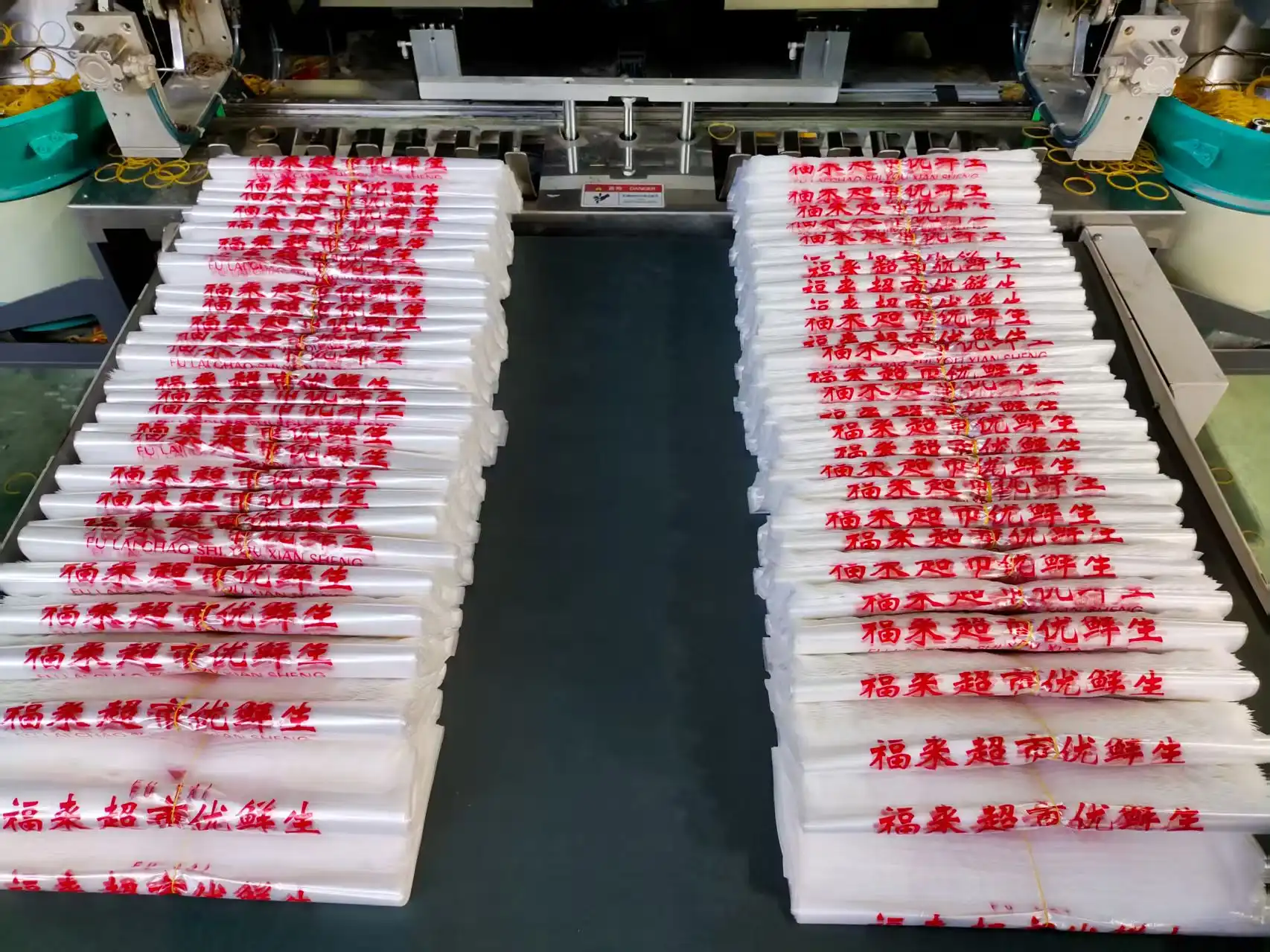
Understanding Poly Bag Case Liners and Their Role in Packaging
What a Case Liner Does Inside the Carton
A polyethylene or polypropylene bag that fits inside a corrugated box, crate, or ship is called a case liner. The outside world can't get to your goods. It's not as stable to stack corrugated board when it's wet because it soaks up water. It keeps dust, water, and spills from getting on the board and the things inside it. When you pack things that are wet, greasy, or dusty, it also keeps leaks from getting to the board. Often, the liner means that you don't need to add any extra packing. That means fewer broken boxes and fewer claims for the team that buys things.
Material Choices: LDPE, LLDPE, HDPE, and PP
How the lining works depends on the material that is used. LDPE film tends to gather in corners because it is soft and easy to bend. You can get the same strength for less money by using a thinner gauge. This is possible because LLDPE is less likely to tear or puncture. HDPE film is more rigid and seems to be clearer. PE is less clear and can't handle heat as well as PP. HDPE, LDPE, and PP are some of the materials that SYM works with. Multi-layer co-extrusion is something our plant can do when one plastic isn't enough to protect you. Let me know what you're packing, and I'll help you find the right movie.
Where Liners Protect Products in Real Applications
In different areas, the Poly Bag Case Liners are used for various jobs. Blue bags are used to make frozen meat and fish look safer and keep it from getting freezer burn when they're packed. Resin, powder, and granule cases are lined with chemicals to keep out moisture, since powder that is wet tends to stick together. People who work in medicine and pharmaceuticals use liners to keep germs and dust out, and some ask for anti-static film to make the liners less likely to pick up dust. Paper lines the inside of seed and grain boxes to keep water out. You should pick a bag that is the right size and thickness for the case based on its weight, risk of getting wet, and how you want to clean it.
Key Dimensions for Matching Poly Bag Case Liners to Carton Sizes
Measure the Carton the Right Way
Start with the sizes of the inside. Don't start with the measurements of the outside. In order to make room for the numbers, the outside numbers are bigger than the space that can be used. If you want to be sure, measure the length, width, and height more than once. This is because boxes can bend or change slightly from one run to the next. Writing down each number to the eighth of an inch or millimeter is important. Also, don't forget to write down the highest fill height. Then look inside a box that is full, since big things can make the walls move outward. These numbers should all be put on one piece of paper that your sourcing, buying, and engineering can all read. Orders don't get mixed up when everyone uses the same sheet.
Bag Size Conventions and Gauge
Most of the time, suppliers list a flat bag by its width, length, and a third number called "gauge." Gauge talks about how thick a film is. We measure it in mils here in the US. 26.4% of an inch, or mil, is equal to mil. Most Poly Bag Case Liners are between 0.75 mil and 6 mil thick. Stronger film doesn't get holes from big fill or sharp edges, but it costs more per bag. As per ASTM D1709, you can test sheets to see how well they stand up to being hit by a dart. You can tell if the seams will hold up under load by testing the seal strength according to ASTM F88. Ask for these numbers when you compare quotes.
Calculate the Bag Size Step by Step
I do three things. First, add the length and width of the inside. After that, leave about 2 cm of space. Since there is a flat bag around the outside of the box, those two sides make up half of it. Second, measure the height on the inside and add 10 cm to give yourself room for the edges to fold over. After that, add three more centimeters for the bottom cap. Third, try out one box and round up to the next largest size that's made. That means a 14-cm-wide, 25-cm-tall box can hold a 30-x40-cm bag. The length should be about 38 cm, and the width should be 30 cm (14 + 14 + 2). A 16 cm x 17 cm base that is 30 cm high leads to a 35 cm x 45 cm space. A 40 cm by 50 cm space is reached from a base that is 18 cm by 20 cm and 35 cm high.
Common Challenges When Matching Bag Size to Carton Dimensions
Oversized Liners Waste Film and Slow Packing
When the Poly Bag Case Liners are too big, it might not look safe, but it is. It costs money to have extra film, and when you add up all the extra film from different boxes, it adds up. People who pack things have to spend time getting rid of wrinkles and moving bags into corners because loose film folds up and takes up space. If the bag is too big, it might not feed right or get stuck on an automatic machine. Getting the bag to the right size saves time and money and makes the case look better when it's done. I always think about whether getting a smaller bag will save me money or be too small.
Undersized Liners Cause Tears and Exposure
The cover doesn't protect the box's sides and rim if it's too small. The item and the board then get dirty, wet, or spilled on. When film is stretched, the ends get smaller, which means that a sharp edge or heavy fill can tear it. You can't stack 50 kg of liquids or other heavy things without the contents getting wet through a torn liner. Wet corrugated is also less strong when stacked. Also, packers often leave the top open because bags that are too small won't close. Take the largest fill instead of the average one. You can then take into account the fold-over, the shape of the item, and any padding. The film won't get too tight if you do these steps.
Shared Measurement Rules Prevent Sizing Errors
A lot of mistakes in size happen because the carton data is wrong or because different teams are using different numbers. A simple plan should work, I believe. The supplier, buying, package engineering, and quality assurance (QA) all use the same standard measures for the outside and inside of the box. An engineer looks at the object's shape and weight. Once QA says it's okay, the team tests the sample on a real line before sending out the whole order. After the sample and drawing have been approved, they are used for new orders. When a supplier of cartons changes the board or tools they use, someone has to measure again. This is the drawing you made. Before it starts being made, more than 40 expert workers at SYM can look it over.
Comparing Poly Bag Case Liners Types for Different Carton Sizes
Heavy-Duty and Standard Liners
Most Poly Bag Case Liners can hold things that are dry, light, and soft. Thick film or stronger resin mixes are used to make heavy-duty bags that can hold things that are dense, sharp, or heavy. If your load weighs 50 kg or more or has sharp edges, choose a bigger size and a resin that won't cut, like LLDPE. It's also important what kind of seal you use. Some designs, like side-weld and star-seal, are better at packing liquids or wet things. It costs more because thicker film needs more glue. Match the scale to the real load, not a made-up worst-case load. If you want to know how strong something is at the same size, look at the dart impact numbers instead of just the thickness. This is because the type of resin changes how strong it is.
Clear, Colored, and Specialty Films
Checkers and inspectors can see what's inside without having to open the lid, which is useful for numbers and checks. Film with a tint of color, like blue tint, makes things stand out. Colored films that are opaque can keep light from getting through. When resins are mixed in multi-layer co-extruded film, the barrier against UV light, oxygen, or water is stronger. For places that are clean, anti-static film costs more but makes it harder for dust to stick to surfaces. Biodegradable films can be used for projects that care about the earth. But their strength and ability to block water are not the same as polyethylene's, so get test results before you switch. You should only add a feature if the product really needs it.
SYM Deep-Protection Liners for Chemical Drums and Containers
Our deep-protection layer stops water from getting in and causing leaks. It's used to cover chemical drums and barrels so the contents don't get dirty, and it can hold 50 kg or more. 30x40 cm, 35x45 cm, and 40x50 cm are the standard sizes. It comes in a size of 110x110x130 cm for big sizes. If your container needs a different size, send me the inside measurements, and I'll make it work. To make these bags out of HDPE, LDPE, or PP film, we use computer-controlled flatbed machines that can make bags quickly and accurately. Our company has both the China QS certification and the ISO9002 quality management certification.
Practical Steps to Source Custom Poly Bag Case Liners
Prepare a Clear Specification
Suppliers can only offer what you tell them, so I need three sets of information:
• Carton and container data: Tell them how long, wide, and tall the inside is, as well as the highest level of filling and any strange shapes or inserts. Add a drawing or picture if you have one. If the sizes are clear, our team can quickly figure out the width and length of the flat surface without having to email and receive files first.
• Product and load: As well as the weight of each case (at least 50 kg), what's inside, and if there are any sharp edges, please let me know. Tell them what kind of food-contact paper you need and what could go wrong if it gets wet, leaks, or gets contaminated. This way, the type of film and seal will work well for the job.
• Order details: Write down the size, color, writing needs, style of closure, how you'd like them packed, the yearly number, and the delivery date. Roll packing is important if you use automatic case-lining equipment, and the amount of work we do each year helps us figure out how much we will need to do next year.
The quote and the first sample are a much better match for your cartons now that you know these things.
MOQs, Lead Times, and Shipping to the US
Because custom Poly Bag Case Liners sizes have to be made in big amounts, providers set minimum order amounts. Get an exact number and compare it to how much you use each year. Your MOQ will depend on the size, gauge, and print. The price per unit goes down when you buy more, and an annual forecast helps us plan our resin and capacity. It can take anywhere from two to four weeks to make something custom, depending on how much resin and chemicals like anti-block or UV inhibitors are in stock. Get the date in writing. Plan for the time it takes for ocean freight to get to the US and for customs to clear. Also, place your order early during busy times of the year. Our customer service team is open seven days a week, 24 hours a day. We've sent packages to over 40 different countries.
Benchmark Suppliers Before You Commit
Names that are easy to remember help you keep track of things. The Uline store is known for always having a lot of shipping supplies in stock, like poly liners, which are easy to buy in standard sizes. Berries Global makes plastic boxes, and Sealed Air makes boxes that keep things safe. 3M is better known for the glues and tapes you use to close up boxes. A custom maker is the best choice when you need exact sizes, print, or a certain type of film structure. It is important to look at prices that are the same for gauge, resin, seal type, accuracy, test data, and verification. That was in 2017. SYM has a factory that is 8,600 square meters and has more than 100 workers. Our Poly Bag Case Liners are sent to people in Asia, the United States, Europe, and Australia.
Conclusion
Before you can match Poly Bag Case Liners to carton sizes, you need to get exact measurements of the inside. To find the length, add the height to the fold-over edge and the base to the number. Then, find the flat width from the base. After that, you can use a real box to check your work. If the liner is too big, it tears, and the goods show through. If it's too small, it tears, and the goods show through. Based on the load's weight, the chance of water getting in, and the item's shape, the resin, gauge, seal, and color are then chosen. When the loads are heavy or sharp, they need stronger film, like LLDPE. Multi-layer films, reusable films, and films that don't attract static electricity cost more and have a good reason for that. The buyer, engineering, and the seller all look at the same full specification, which lists the size, weight, gauge, and volume. This makes sure that orders and quotes are always right.
FAQ
How do I size a liner for an irregular carton?
How to find the flat width and length of something? You need to know its full height as well as its length and width at their biggest point. Put in a little more slack around corners or inserts that aren't straight. Order a small batch to test on a real box before you buy the whole lot.
Are Poly Bag Case Liners recyclable?
Like LDPE, polyethylene film has a resin code of 4. Through programs for plastic film, clean Poly Bag Case Liners can be reused. Maybe you can't use liners that held food or chemicals. Check the rules in your area and talk to the people who take care of your trash. Liners made of a single material are easier to recover than structures made of a mix of resins.
What drives the cost of a liner?
It costs money based on the kind of film used, the bag's size, any extra layers, the printing, and the number of things bought. Anti-static, multi-layer, and heavier gauge films cost more per unit, but as the run size increases, the cost per unit goes down. It changes the price and the schedule if you tell the seller how much you buy every year.
Request Your Poly Bag Case Liners Quote from SYM
Feel free to email jinlidasuliao@zohomail.cn with the size, weight, and items of your box, and SYM will help you choose a Poly Bag Case Liners cover. Since we make these liners and have customer service open 24 hours a day, seven days a week, we can talk to you about short-term deals and return business. Over 40 different countries get our goods. Visit jinlida.aixdb.cn to find out more.
References
1. ASTM International, Standard Test Methods for Impact Resistance of Plastic Film by the Free-Falling Dart Method (ASTM D1709), 2016
2. ASTM International, Standard Test Method for Seal Strength of Flexible Barrier Materials (ASTM F88/F88M), 2021
3. U.S. Food and Drug Administration, Code of Federal Regulations Title 21, Section 177.1520 Olefin Polymers, 2023
4. Ebnesajjad, Sina (ed.), Plastic Films in Food Packaging: Materials, Technology and Applications, Elsevier, 2013
5. International Organization for Standardization, ISO 9001:2015 Quality Management Systems — Requirements, 2015
6. U.S. Environmental Protection Agency, Advancing Sustainable Materials Management: 2018 Fact Sheet, 2020

Send Inquiry
You may like