
What Should Distributors Check When Sourcing Blue Plastic Bags from Manufacturers?
Nov 11, 2026
Distributors should check six things when sourcing a Blue Plastic Bag https://www.jldplastic.com/non-virgin-materia-vest-bags/blue-plastic-bag from a manufacturer: the intended application, material and thickness, usable dimensions and color consistency, quality control and documentation, total landed cost, and logistics capacity. A low unit price means little if seals split under load or cartons arrive late. I wrote this guide to help you compare suppliers on equal terms, request useful samples, and close specification gaps before they become costly. It also shows how our modified PE blue bag from SYM fits aquatic and hardware uses, where quick visual identification matters.
Define the Blue Plastic Bag Application Before Requesting Quotes
Describe the Job the Bag Must Do
Write down what's in the Blue Plastic Bag before you ask how much it costs. A good design takes into account the load's weight, the amount of water, any sharp edges, the weather, and how it will be used. A bag for metal fixings and a bag for wet fishing gear are put under different types of stress. What you charge and how you plan your work will also depend on how much money you make each year. Then pick a style, like roll-packed, flat-sealed, gusseted, or drawstring. The spec sheet should clearly show the size, width, material, color, closing, box style, order number, and place where the item is being sent. For each price, you don't have to guess what's on the sheet because everyone gets it. Instead, you can compare quotes line by line.
Check Material, Thickness, and Weight Capacity
How bendy, hard to cut, and expensive something is depends on what it's made of. Because they don't stretch or tear as easily as HDPE, LDPE and LLDPE are better for light work. It's also possible to use changed PE with fillers to keep the color the same. Check to see if the thickness is given as an ideal or minimum number and in microns, mils, or gauge. It's strong even if it's not thick. The ASTM D882 test checks how stretchy a thin plastic film is. The ASTM D1709 test checks how well it can handle being shot. They can ask you to do these tests, and then you can do them yourself with real things.
Evaluate Dimensions, Color, and Functional Design
Not all the time, the nominal capacity and the real capacity are one and the same. First, use the same method to measure each sample. Then, compare the flat width, length, gusset depth, hole size, margins, and seam construction. Color is also important. People who work there can quickly tell which bag is which since they are all the same shade of blue. Find out how the supplier makes the color of each batch. You can ask for color checks based on CIELAB values and a certain Delta E range. If the pattern has handles or bows, use a full load to test the pull power. Last but not least, pick the packaging that will work best in your building. You could use sheets, rolls, or large boxes as an example.
Verify Manufacturer Quality Control, Compliance, and Documentation
Confirm Production Capability and Inspection Points
A trustworthy company won't be afraid to talk about its plant, its tools, the goods it has sold in the past, and the steps it takes to make sure the quality of its goods. They should show you how to check the plastic, stretch the film, make the Blue Plastic Bag, close it, print on it, pack it, and ship it. Size, color, thickness, the strength of the seal, the weight of the box, and being able to keep track of each batch are all important things to keep an eye on. Checks should be done while the work is being done, inspections should be done before the shipment, samples should be kept, and loading photos should be taken for bigger orders. Get a license that is up to date and think about what it says. It tells systems for quality management how to work and is named ISO 9001:2015. When something goes wrong, what does the service provider do?
Review Compliance and Sustainability Claims
Labeling, chemical, and food-contact rules change depending on where the things are going and what they are being used for. Before they place an order, US buyers should make sure they follow these rules. Keep an eye out for words that mean "sustainability." Compostability, recyclability, and recycled material are all words that mean different things and can't be used together. These are the FTC Green Guides. They explain what marketers in the US can say about the environment and how they should back it up. The bag needs the same proof no matter what color it is. You should get test reports, technical data sheets, and material declarations. Then, look at how your market gathers information and compare each claim to that.
Test Samples and Score Each Supplier
Simple scorecards make sure that everyone has an equal chance to pick. I think that things like how well the product fits, how clear the materials are, how well the product works, quality systems, compliance, customization, capacity, delivery, business terms, and service should all be given points. Before you begin, make sure that the following are in order: accepted samples, proven sizes and thickness; no quick changes to the material; checks that can be tracked; agreed-upon defect limits; and batches that can be tracked. Then, start with an RFQ, then look over the documents, try samples, place a trial order, check the first shipment, and get approval for a second order. Things that go wrong that aren't shown on the data sheets are handles that tear, seals that leak, color changes, and stretching when they're loaded. Finding these problems early on costs less than finding them after the container is full.
Compare Cost, Customization, and Supplier Types
Calculate Total Cost of Ownership
The only things that can make two quotes the same are the order amount, locations, sizes, thicknesses, resin grades, closures, printing, packing, printing, making, and shipping of the goods. A lower price usually means that the bags, film, seals, or number of bags per box are thinner or less strong. Figure out how much it costs to send each box, bag, and pallet. Once you have that number, add up how much it costs to ship, store, make mistakes, fix things, and follow the rules. Make separate notes for MOQ, volume discounts, payment terms, printing plates, artwork, and setup costs so that the unit price doesn't hide anything. The toll-free ownership costs are a better way to show how much it costs to own than just the price it cost at the factory. They also help you keep your profit when new customers buy something.
Assess OEM and Private-Label Capability
Customization is very important because many wholesalers sell under their own name. It's possible to choose from different box sizes, film thicknesses, blue color matches, written names, barcodes, and boxes with your own sign on them. You need to choose the print area, number of colors, ink type, artwork style, review steps, and registration tolerance before you start an OEM project. The people who own the tools and art should be listed, along with the rules for privacy and non-sharing. You should ask the seller if they will still follow the same rules if the work goes from tests to containers. People will be pleased as long as all large runs are printed and sealed the same way.
Choose Between Local Stock, Direct Manufacturers, and Trading Companies
There are good and bad things about each source plan. Most of the time, local stock sellers can get items to you faster, have lower minimum order amounts, and make it easy to return items. But each unit costs more, and there aren't as many unique choices. When you work with makers, you can talk to the people who make the things and get better deals. Of course, when orders are bigger, the steps need to be planned out more carefully. Trading firms make it easier to buy mixed goods, but you might not get to see as much of the plant and its rules. Your choice will depend on how much you need each year, how much customization you need, how much time you have, how well you need to meet safety standards, and how much warehouse room you have. People who buy in bulk and need a steady supply of Blue Plastic Bags should usually go with direct makers.
Review Lead Times, Logistics, and Common Sourcing Mistakes
Map the Full Lead Time and Export Logistics
There is only time given for part of the plan to be made. Along with making test pieces, getting permission for the art, buying materials, checking, packing, shipping by land or sea, and moving the goods within the country, these are all things that should be covered. Moving and storage costs vary based on the number of items put into each box, the size of the box, the shape of the pallet, and the force of the compression. Find out what the service provider does when there is a lot of demand, not enough resin, machine maintenance, or a need to fill up quickly. As a planner, it's better to have a named person to talk to, clear confirmations of orders, and regular updates on production. A lot of places get things made in China. Before you sign, make sure you understand which Incoterms apply and who is responsible for each step.
Avoid Common Sourcing Mistakes
A lot of bad things happen when people compare quotes that aren't really the same. People often pick the cheapest choice, think that width is the only way to measure strength, believe hype about being green that can't be proven, skip load tests, and don't think about how much the box and freight will cost. Also, it's not a good idea to start production without writing down the details of the material, size, limits, color, closing, printing, packing, inspection standards, and ways to fix issues. It's safer for everyone, and orders are always the same when they are written down. Besides that, I think you should keep an approved sample on hand so that any shipment after that can be compared to a real one.
Use a Final Checklist Before the Purchase Order
Look it over one more time before you send an order. When a Blue Plastic Bag is checked, its shape, size, material, thickness, capacity, closure, color, and how it is packed are all looked at. The item is also asked to be used. The supplier checks to see how well the factory can do its job, including how to inspect, keep track of items, and handle customer complaints. Rules for the destination, important statements, claims about the environment, and any certificates that are specific to the application are all checked to make sure they are followed. Prices, tools, lead times, payment terms, Incoterms, load data for pallets, plans for restocking, and payment terms are some of the things they look at. With this quick review that doesn't take long, you can avoid most of the costs and risks.
How SYM Supports Distributors in Sourcing a Blue Plastic Bag
Product Details of Our Modified PE Blue Bag
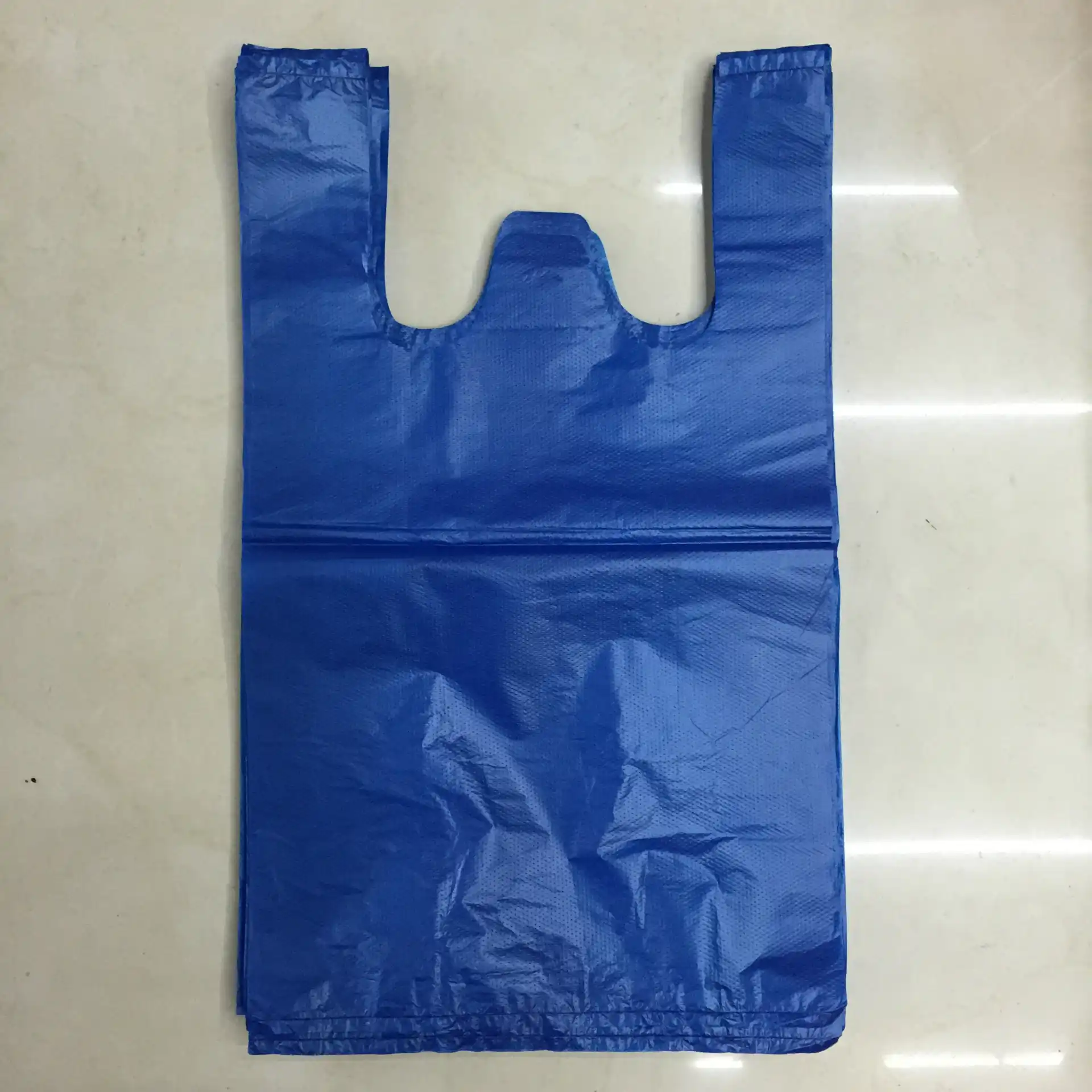
Our Blue Plastic Bag is a normal shade of blue and is made of modified PE with stuffing. It can hold between 5 and 8 kg. They range in size from 10 centimeters wide and 28 centimeters long to 65 centimeters wide and 110 centimeters long. The unit weight range is from 0.7 kg to 60 kg. People who work with hardware and water sports use it to find things quickly. For example, they can tell the difference between product lines, gear, and parts. We'll write you back with the exact size, weight, and packing needs.
Factory Strength and Quality Systems
We've been making things in our 8,600-square-meter plant for over 20 years. More than 40 of our more than 100 employees are tech experts. We have both the QS certification and the ISO9002 quality management certification from China. Our high-speed gravure printers are run by computers. On top of that, we have accurate cutting machines, photoelectric correction laminating machines, and fast machines that make bags. HDPE, LDPE, and PP are the materials we use to make our goods. We can print in many colors, co-extrude with many layers, and make things automatically. Our customer help team is available seven days a week, 24 hours a day. We also send packages to more than 40 different countries and regions.
Where Aquatic and Hardware Buyers Benefit
Hardware shops, seafood stores, and fisheries all need people who can quickly check bags to see what's inside and make sure they can hold up under light loads. It's easy to sort because it's all blue, and the 5–8 kg capacity is enough for most everyday items in these towns. We can add logos or information about the product when you want us to because we make the boxes ourselves. Do you want a sample? I can send it to you. Also, please look at these checks and compare them to our bag. Taking tests in real life is a better way to learn than reading brochures.
Conclusion
Before you can find a good Blue Plastic Bag, you need to write down exactly what you need. Then you need to look at the available size, color, material, and thickness. ASTM D882 and D1709 tell you how strong something is. Proof of quality and inspection steps show how a business checks the work it does. You need to show proof that something is sustainable before you say it is. Color doesn't tell you anything on its own. Prices that seem too different may not be. To avoid this, compare quotes based on the total cost, which includes shipping, packing, and any flaws. The type of tailoring, the wait time, and how well the operations are planned will show you if stock stays the same between sales. These steps can be used over and over with a scorecard, practice tests, and a final checklist. This makes it safer for distributors to source.
FAQ
What should an RFQ for a blue bag include?
You should send the item's purpose, size, thickness, color, close, writing, packing style, number, location, certificates, and delivery date. If you give all of this information to the provider, they can set prices based on it for the Blue Plastic Bag.
Is thickness enough to judge bag strength?
No, the seal, the fillers, the type of resin, and the film's thickness are all important. Check out ASTM D882 and ASTM D1709 to learn more about tension and dart impact tests. Do a load test with real things too.
Is a blue bag automatically recyclable?
Yes, it can be recycled if the polymer, additives, and recovery methods in the area are all the right ones. The FTC Green Guides are about how to market in the US in a way that is good for the environment. Stay away from claims that can't be true and make sure you get important statements.
Request a Blue Plastic Bag Quote from SYM
Want to find a plan that can help you make Blue Plastic Bags? Tell SYM what size you need, how much weight the bags should carry, how many you need, and where you want them delivered. In 24 hours, our team will get back to you, give you examples, and make prices clear. You can see all of our changeable deals at jldplastic.com or contact us at jinlidasuliao@zohomail.cn for more details.
References
1. ASTM D882 Standard Test Method for Tensile Properties of Thin Plastic Sheeting, ASTM International, 2018.
2. ASTM D1709 Standard Test Methods for Impact Resistance of Plastic Film by the Free-Falling Dart Method, ASTM International, 2016.
3. ISO 9001:2015 Quality Management Systems – Requirements, International Organization for Standardization, 2015.
4. Guides for the Use of Environmental Marketing Claims (Green Guides), Federal Trade Commission, 2012.
5. Advancing Sustainable Materials Management: 2018 Fact Sheet, U.S. Environmental Protection Agency, 2020.
6. Plastics – the Facts 2022, Plastics Europe, 2022.

Send Inquiry
You may like