
What Should Importers Evaluate When Choosing Recycled Poly Bag Manufacturers?
Nov 12, 2026
Importers should evaluate seven things when choosing Recycled Poly Bags https://www.jldplastic.com/non-virgin-materia-vest-bags/recycled-poly-bagsmanufacturers: the material source and verified recycled content, film strength and thickness, bag design and printing, certifications and legal claims, quality control, total landed cost with MOQ and lead time, and the supplier's true role in the supply chain. Unit price matters, but it tells only part of the story. I wrote this guide to help purchasing managers, distributors, and packaging engineers compare suppliers step by step, using clear checks, sample tests, and written proof instead of marketing promises.
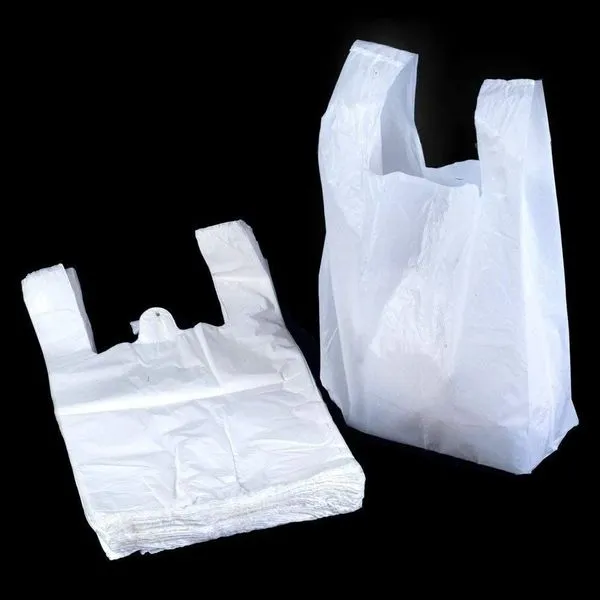
Verify Material Source, Recycled Content, and Film Performance
Confirm PCR, PIR, and the Recycled Percentage
Put the glue first. Post-consumer recycled (PCR) means that the material came from used things. Post-industrial recycled (PIR) items come from factory waste. Even though ISO 14021 says they can both be recycled, people usually deal with them in different ways. PCR can help people reach their environmental goals, and PIR can give them more stable color and performance. Ask the company what the amount is, what kind of plastic it is (LDPE, HDPE, or a mix), and whether the number is for the whole bag or just one layer. The FTC Green Guides tell marketers that they shouldn't say that a product is made from repurposed materials if it has less than 100% found materials. Claims that cover too much ground are not a good sign. Get proof and records for every batch, like GRS, which says that at least 20% of the material must be cleaned up.
Check Thickness, Strength, and Appearance
How thick it is, how much it can hold, and how much it costs to ship are all shown by the thickness in microns or mil. Find the best deal by comparing the gauges of each quote. Find out the tensile strength according to ASTM D882 and the dart impact according to ASTM D1709. Then, check to see how well the bag's seal works. First, get a signed reference sample. This is because recovered film might have haze, small color changes, or a bad smell. You should write down the width range. When it's full, the bag might break, even if it looks fine on the outside. Check to see if there is a thin spot. Test how well your models hold up by putting real boxes on them.
Match the Film to Your Application
It's important to have the right bag for the job. SYM sells Recycled Poly Bags made from carefully chosen materials and are very flexible. They can hold 6 to 10 kg of weight. You can ship things in these bags and store things in them. This means that it costs less to pack each package. One piece can be anywhere from 10 inches wide and 28 inches long to 65 inches wide and 110 inches long. Weights range from 0.7 kg to 60 kg. First, check that you understand what each number and unit of measurement in the quote means. Then, put your biggest item in the bag to see how it works. It should be clean and not smell bad for people who pack clothes. It should be hard to puncture and stick to labels well for e-commerce teams.
Review Designs, Printing, and Compliance
Compare Bag Formats and Closures
There are different types of bags that importers can pick from, such as boxes, clothes bags, zipper bags, cases, and handle bags. Make your choice based on what you need to do: ship safely, put on display in a store, or use over and over. It's just as important to close things. Pull-tabs, tear strips, hang holes, and sticky strips must all work with the film. It can be tougher to do when different things are recycled together. SYM sells plastic bags made of HDPE, LDPE, and PP. They have zipper bags, roll bags, tote bags, and more. Someone can talk to them about a number of different bags. If a seal looks like the one you want, ask each firm to show you a real one.
Check Printing and Customization Capability
Brand teams need print quality that doesn't change when they want to make a lot of sales. Check the colors, make sure the ink sticks, and make sure the barcodes are right. Ask what needs to be done to approve the art. At SYM, computers run high-speed gravure printers, high-speed bag makers, and precise slitting machines. It can also print in more than one color and have more than one layer of co-extrusion. You still want a written copy on the film itself even though used film doesn't look exactly like new film. Before you sign off, pick a bunch of colors. Making it clear how big, thick, and where to put the art also saves time because the sampling round doesn't have to be done again.
Verify Certifications and Environmental Claims
You have to follow the rules based on where you're going and what you want to do. For items brought into the U.S. from other countries, look at state laws like Proposition 65 and California SB 343 (signed in 2021). These laws control claims that an item can be recycled. Based on what the bag says, it can be reused, recycled, biodegradable, or compostable. If it's been recovered, you can't compost it. You need to get special permission to use it with food, which a recycled ingredient claim will never do. You need to see test results and proof that the product is good. Both the ISO9002 quality management system certification and the QS certification from China have been given to it. You can get copies of these papers from any provider.
Assess Quality Systems, Commercial Terms, and Delivery
Look at Quality Control Steps
The quality system of a supplier checks to see if the sample that was picked matches the thousandth box. Find out how the factory checks the resin, the thickness, the printing, the sealing, and samples of the finished goods before they are sent out. Having written down steps for fixing problems, inspection standards, and group records shows that work is getting done more efficiently. More than 100 people work at the SYM workshop, which is over 8,600 square meters and has more than 40 expert staff. You should try to visit the plant and ask for a list of things you need to do to get OK. It needs a blank sample, a printed sample, a check for the first piece, and a review before it is sent out.
Calculate Total Landed Cost and MOQ
The quoted unit price is only one part of the total cost of Recycled Poly Bags. To calculate the actual purchasing cost, buyers should consider the bag's length, width, weight, recycled material content, resin grade, printing requirements, closure type, tooling, packaging, freight, customs duties, and taxes. When sourcing Recycled Poly Bags, do not assume that the same minimum order quantity (MOQ) applies to every product. Stock items, made-to-order printed bags, special-color bags, and products requiring new tooling may each have different MOQ requirements because they involve different production processes and workloads. Trial orders and sample approval procedures can also help buyers evaluate a supplier's capabilities before committing to a full order of Recycled Poly Bags. In addition, product durability should never be overlooked. A bag that costs less to manufacture but breaks when carrying a load of just 5–10 kg may result in damaged goods, customer complaints, and additional replacement costs. Therefore, when comparing suppliers of Recycled Poly Bags, buyers should focus not only on the cost per bag but also on the cost per box successfully delivered on time. This broader evaluation provides a more realistic picture of purchasing value and helps ensure a reliable supply of Recycled Poly Bags.
Confirm Lead Time, Capacity, and Incoterms
How long does it take to make samples, artwork, tools, and mass production? How long does it take to check and send paperwork for export? Seasonal buyers should also find out how much can be bought each month and plan where to get the materials. Words like EXW, FOB, CIF, and DDP can help you figure out how you handle freight. FOB is better for people who already work with a forwarder. DDP, on the other hand, makes the seller do more. At SYM, customer service is open 24 hours a day, seven days a week. There are more than 40 places they ship to. This lets people ask questions before the sample is sent out. All of these things were agreed upon in the buy order.
Compare Suppliers and Avoid Common Risks
Factory, Trader, or Converter?
There are three types of businesses: a straight plant, a trading company, and a packaging converter. Direct producers usually give better process insight and faster technical answers. Traders who know a lot can help you find more than one thing and make sales that are better together. Find out who prints the bag, makes it, and deals with quality problems. Then, make a weighted scorecard by giving each of performance, quality processes, compliance, customization, price, wait time, and communication a certain amount of weight. Get samples, technical data, certificates, export references, and a quote from each of the two or three suppliers. The quote should also break down all the costs.
Spot the Risks Before You Order
Low prices can hide things that are bad and cost a lot of money. Just because someone says something is "eco-friendly" doesn't mean anything unless they can prove that it can be tracked, tell you how much of it is recycled, and give you the material. To make seals weak, films break easily, and the color, smell, and thickness of the plastic can change if it isn't mixed properly. People will be safer if they all agree on the resin specs, keep a sealed reference sample, write limits that can be measured into the contract, and ask for checks at the batch level. It costs more if a cheap bag breaks in the warehouse and a shipment is held up or needs to be reordered. I'm not going to work with any seller who won't share files.
Match the Supplier to Your Use Case
Put your needs in order of how you'll use them. When buying office and transportation tools, it's best to look for packing lines that are flexible, can handle a lot, and come in standard sizes. You can do this with the 5–10 kg recycled PE choice. People who make clothes should make sure that the clothes don't smell bad, have hang holes, and are bright. When brands put labels on things they sell online, they should see how well they stick and how easy it is to poke holes in them. When people buy from OEMs and wholesalers, they often add their own labels, forecasts, and multi-market papers. For each job, you shouldn't use the same specs. A bag that works for clothes might not work in a building.
Use a Practical Importer Checklist
Material and Compliance Questions
When a supplier makes recycling claims about Recycled Poly Bags, buyers should verify the source of the post-consumer recycled (PCR) or post-industrial recycled (PIR) material, request supporting documentation, confirm the recovered material content, and understand the legal basis for each claim before approving an order. It is also important to clarify whether the stated recycled content applies to the entire Recycled Poly Bags product or only to a specific layer. In addition, buyers should check how production batches are identified and tracked to ensure material traceability. Before purchasing Recycled Poly Bags, request written confirmation of applicable food-contact requirements and compliance with the regulations in the intended target market. If any information is unclear or cannot be verified, mark the relevant item as "open" and ask the supplier to provide sufficient evidence before accepting the claim. Keep all declarations, certificates, test reports, and supporting documents in a dedicated supplier compliance file. This makes future audits easier and provides reliable evidence to support environmental and packaging claims about Recycled Poly Bags.
Product and Performance Checks
Check the sizes, specs, tensile strength, dart impact, quality of the seal, smell, color, print quality, and inspection standards. Always drop, stack, and handle the sample bags. Fill them with 5 kg and 10 kg. If something goes wrong, snap a picture of it and send it to the seller so that the tech team can fix the seal or film. Make a production sample and do the test again. Early samples and lots made in big numbers might be different.
Commercial and Service Checks
Check the full price list, the minimum order number, the shipping terms, the wait time, the experience with sending, and how quickly you can get in touch. It will be easy to compare prices if you send them all the same sheet of specs. Keep an eye on how fast and clearly they answer technical questions. The answer given before the order often tells you a lot about the service that will follow. Do a one-page scorecard for each supplier before making a choice. Have operations, quality assurance, and purchasing go over it.
Conclusion
When shopping for Recycled Poly Bags, the most important things to look for are proof, value, and fit. Importers should look at how much PCR or PIR is in it and how much of it is recovered. They should also look at the bag's thickness, tensile strength, dart impact, and seals. Also, they need to make sure the format, closing, and printing are right for the job. There needs to be proof that something is legal, like California SB 343 and other checks for food connections. The minimum order quantity (MOQ) and quality control procedures can all help you figure out if a supplier can make a lot of copies of accepted samples. It's reasonable to look at weighted scorecards and a written checklist next to each other. There are times when the cheapest bag won't save you money in the long run if it breaks while being moved or kept. Proof-based review is important to protect both money and brand.
FAQ
Which documents should I request from a manufacturer?
Ask for quality proofs like GRS or ISO certificates, a list of the materials that were used, and records of how each batch was made.
How do I verify PCR and PIR claims?
You should get written proof of where the number came from, what percentage it is, and whether it applies to the whole bag or just one layer. Third-party batch records and certifications are safer to trust.
Does recycled content mean a bag is biodegradable or compostable?
Not at all. The word "recycled" tells you where the items came from. If these things break down, they are recyclable or can be used again. Every claim needs to be backed up by evidence.
Can Recycled Poly Bags handle logistics loads?
Yes, as long as the weight doesn't exceed the film's width, shape, or openings. They can hold between 5 and 10 kg, but you should test samples with your heaviest item first.
Request a Recycled Poly Bags Manufacturing Assessment from SYM
Are you ready to do something? In Rizhao, SYM is a business that makes Recycled Poly Bags. They can give you a quote based on the size, weight, and address you give them. Our customer service team will get back to you right away at jinlidasuliao@zohomail.cn with your height, weight, and goal number. You can see everything they sell by going to jldplastic.com.
References
1. Federal Trade Commission, Guides for the Use of Environmental Marketing Claims (Green Guides), 2012.
2. International Organization for Standardization, ISO 14021: Environmental Labels and Declarations, Self-Declared Environmental Claims, 2016.
3. ASTM International, Standard Test Method for Tensile Properties of Thin Plastic Sheeting (ASTM D882), 2018.
4. ASTM International, Standard Test Methods for Impact Resistance of Plastic Film by the Free-Falling Dart Method (ASTM D1709), 2016.
5. Textile Exchange, Global Recycled Standard (GRS) Version 4.0, 2017.
6. California Legislature, Senate Bill 343: Truth in Labeling for Recyclable Materials, 2021.

Send Inquiry
You may like